Event Recap: Mass Transit and Climate Change: Capital Programs
By Jaley Bruursema and Ruby Foxall, Graduate Research Assistants, NYU Rudin Center
Photos: ©Olivo: Courtesy of NYU Photo Bureau
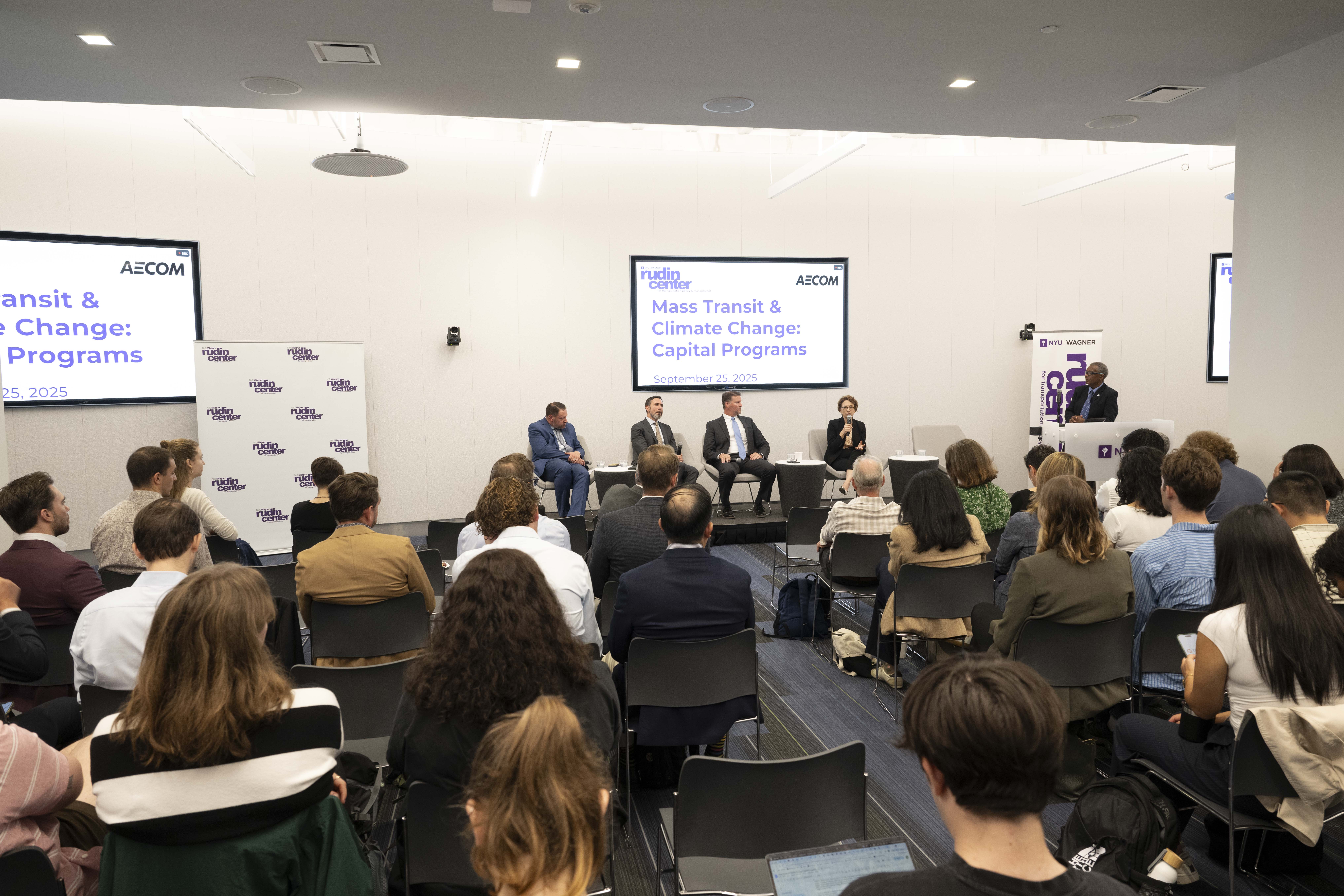

During NYC Climate Week 2025, the NYU Rudin Center and AECOM convened top transportation leaders for the second annual Climate Change & Mass Transit panel. The discussion brought together top experts to confront a critical issue: how to build and maintain a climate-resilient transit system in the face of immense financial, political, and logistical hurdles.
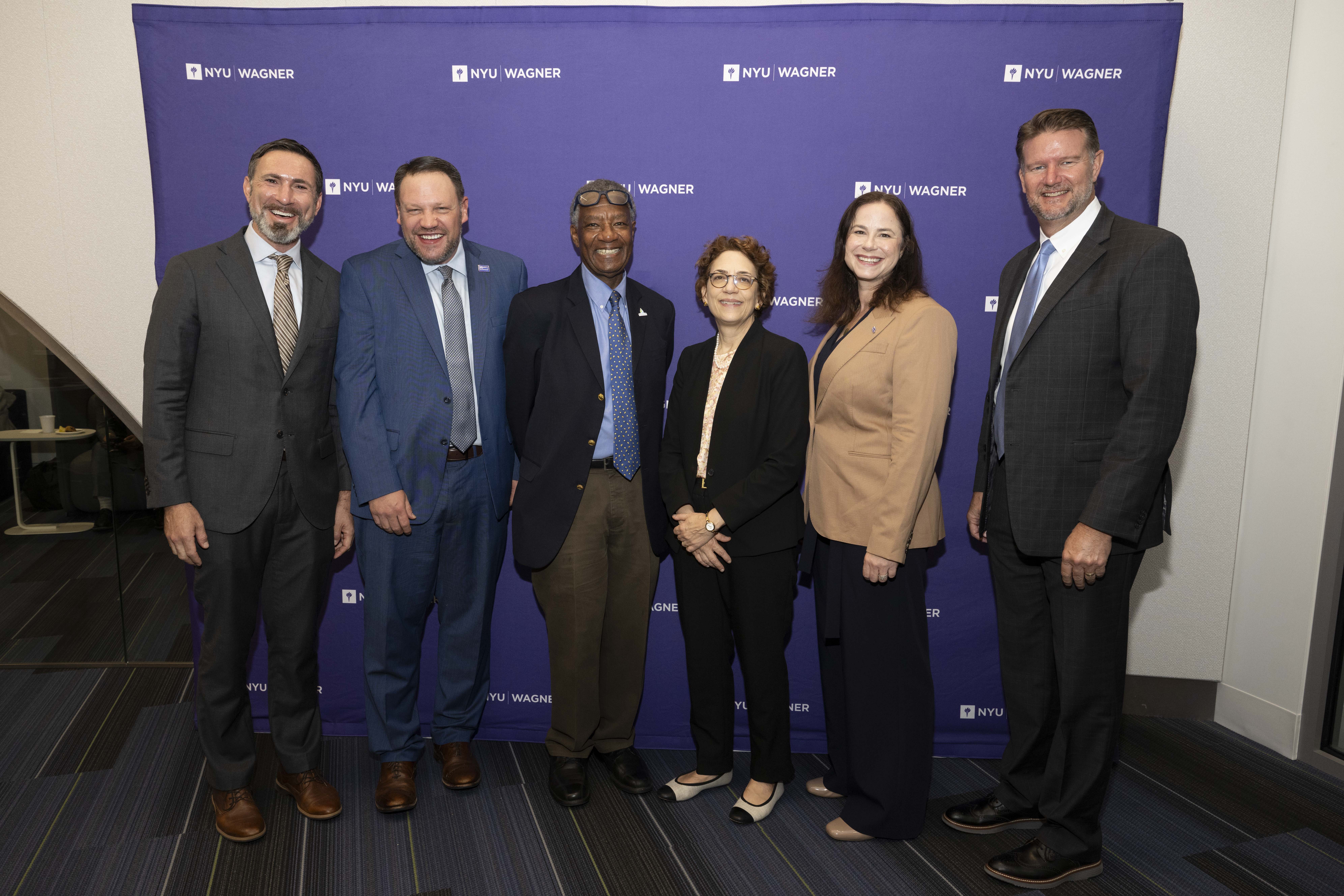
Panelists included:
- Polly Trottenberg, Dean, NYU Wagner (previously U.S. Deputy Secretary of Transportation)
- Jamie Torres-Springer, President, MTA Construction & Development
- Sam Donelson, Executive Vice President & Regional Chief Executive, US East & LATAM, AECOM
- Michael Wojnar, Special Counselor to the Executive Director, Port Authority of NY & NJ
- Ernest Tollerson, Board Member and Chair Emeritus, Riverkeeper, and board member, RPA (discussion moderator)
The conversation spanned topics from exploring new weather prediction technologies to streamlining project delivery and innovative funding strategies for green infrastructure.
Funding Green Projects
A recurring theme was how to sustain funding for large-scale resilience efforts beyond one-time federal grants.
“The challenge is a pretty complicated and epic one,” said Dean Polly Trottenberg. “Those one-time infusions of dollars like this city got for Sandy are fantastic. But you need sustained investment to get ahead of what we're seeing happen in the climate space.”
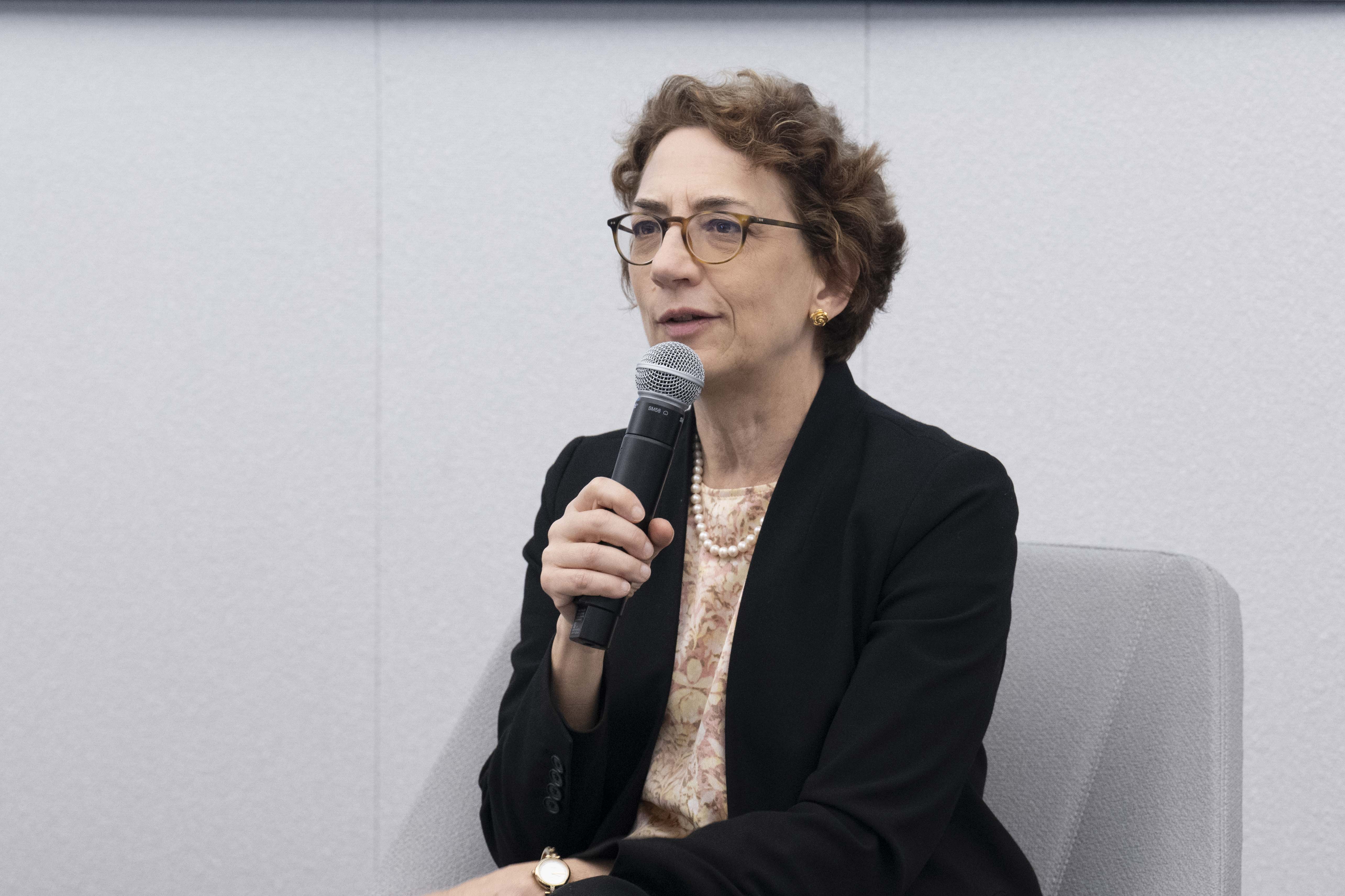
Trottenberg explained that when federal dollars do arrive, agencies often scramble to include multiple priorities in one project, thereby complicating the procurement process and extending timelines.
Sometimes, a potential intervention exceeds feasibility even with federal funding. She recalled a post-Hurricane Harvey discussion in 2017, where New York officials realized that expanding the city’s sewer system to handle the 3 or more inches of rainfall per hour experienced in Texas would cost an astronomical amount—necessitating a risk-based approach to climate adaptation.
Carbon Emissions & the MTA
Jamie Torres-Springer addressed the MTA’s Climate Resilience Roadmap and its $3 billion funding gap, emphasizing that congestion pricing revenues are already being directed toward transformative projects such as:
- The Second Avenue Subway extension
- New subway cars
- New trains for Long Island Rail Road and Metro-North
- New hybrid and electric buses
- ADA accessibility upgrades at 23 subway stations
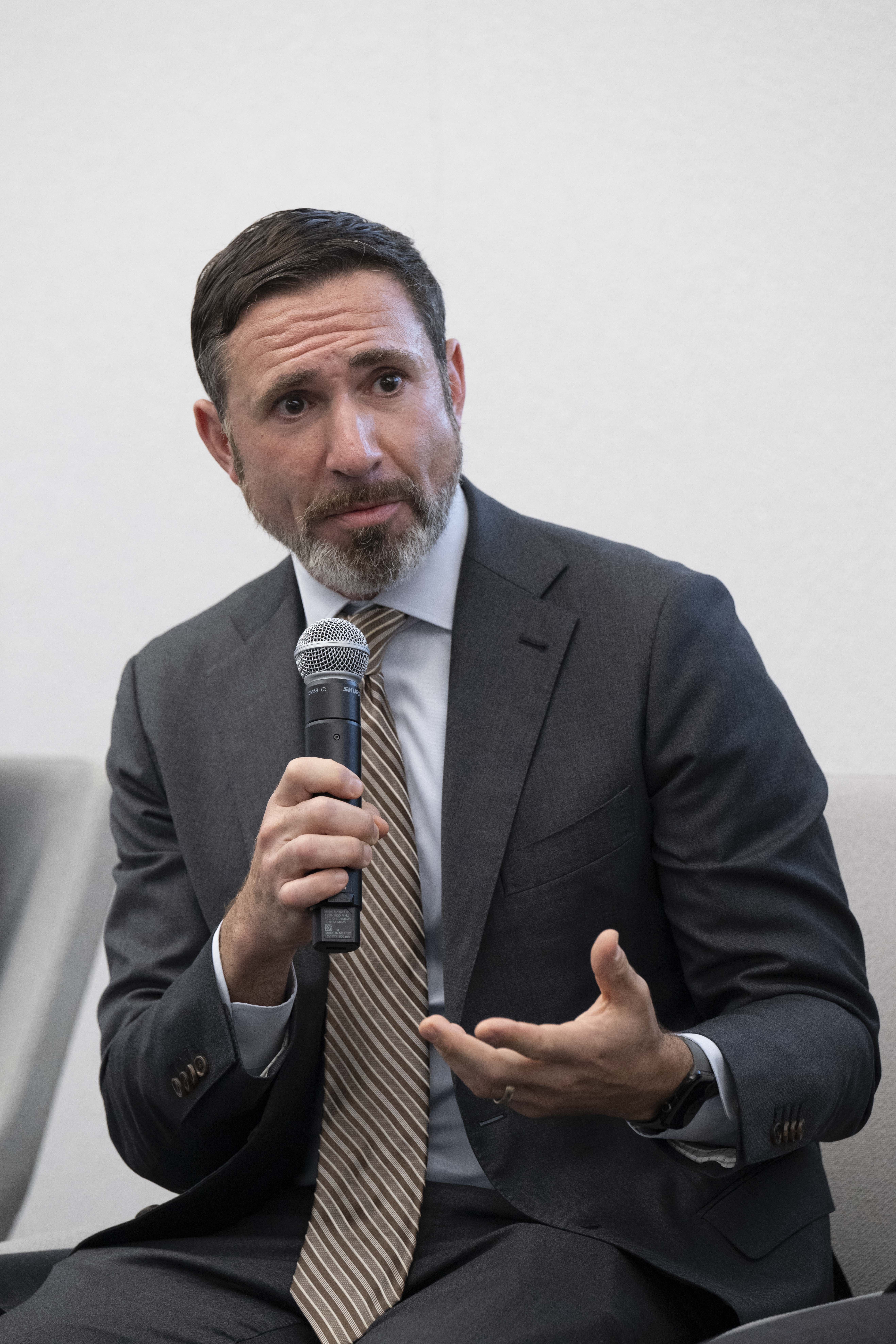
At the same time, Torres-Springer reminded the audience that the MTA’s core service—moving millions of people daily—already delivers enormous environmental value. While MTA vehicles emit about 2 million metric tons of greenhouse gases annually, the system prevents roughly 22 million metric tons that would otherwise come from car travel, resulting in a net savings of 20 million metric tons of carbon emissions each year.
When asked about upcoming initiatives, Torres-Springer highlighted regenerative braking already in use on some trains and geothermal cooling as a future goal for subway stations.
Public Support of Green Projects
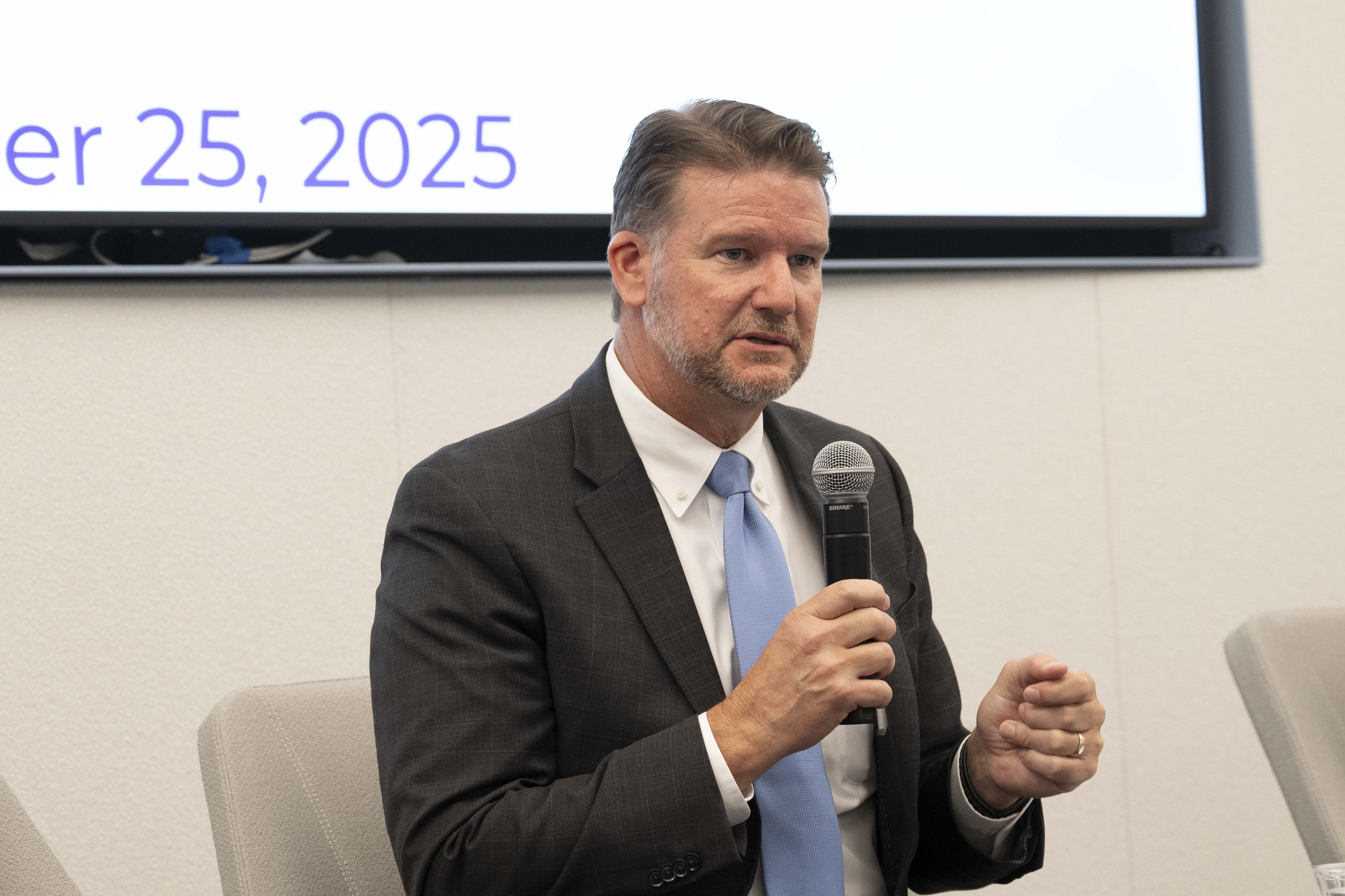
Despite the clear environmental benefits, public support for emissions-reduction projects remains inconsistent. Torres-Springer noted that fare hikes—often considered to fund sustainability measures—can backfire by discouraging ridership and increasing overall emissions.
Sam Donelson contrasted this notion with examples from Latin Ameria, where “there’s more of a unified vision about climate threat and some of the vulnerabilities that our transportation infrastructure is exposed to.” He cited Brazil’s success in identifying revenue sources for climate initiatives with less public resistance, compared to the often politicized funding landscape in the U.S.
Transit-Oriented Development
Panelists also discussed how real estate strategies can support sustainable transit systems. Trottenberg pointed out that in New York City, balancing affordable housing goals with revenue generation adds complexity to transit-oriented development (TOD).
Torres-Springer agreed, citing fractured governance as a challenge, but praised growing collaboration between the MTA and city agencies as a positive shift.
Michael Wojnar added that the Port Authority is advancing TOD efforts, particularly around the Journal Square Transit Center, to capture the added value of multimodal access.
The “Blue Highway”
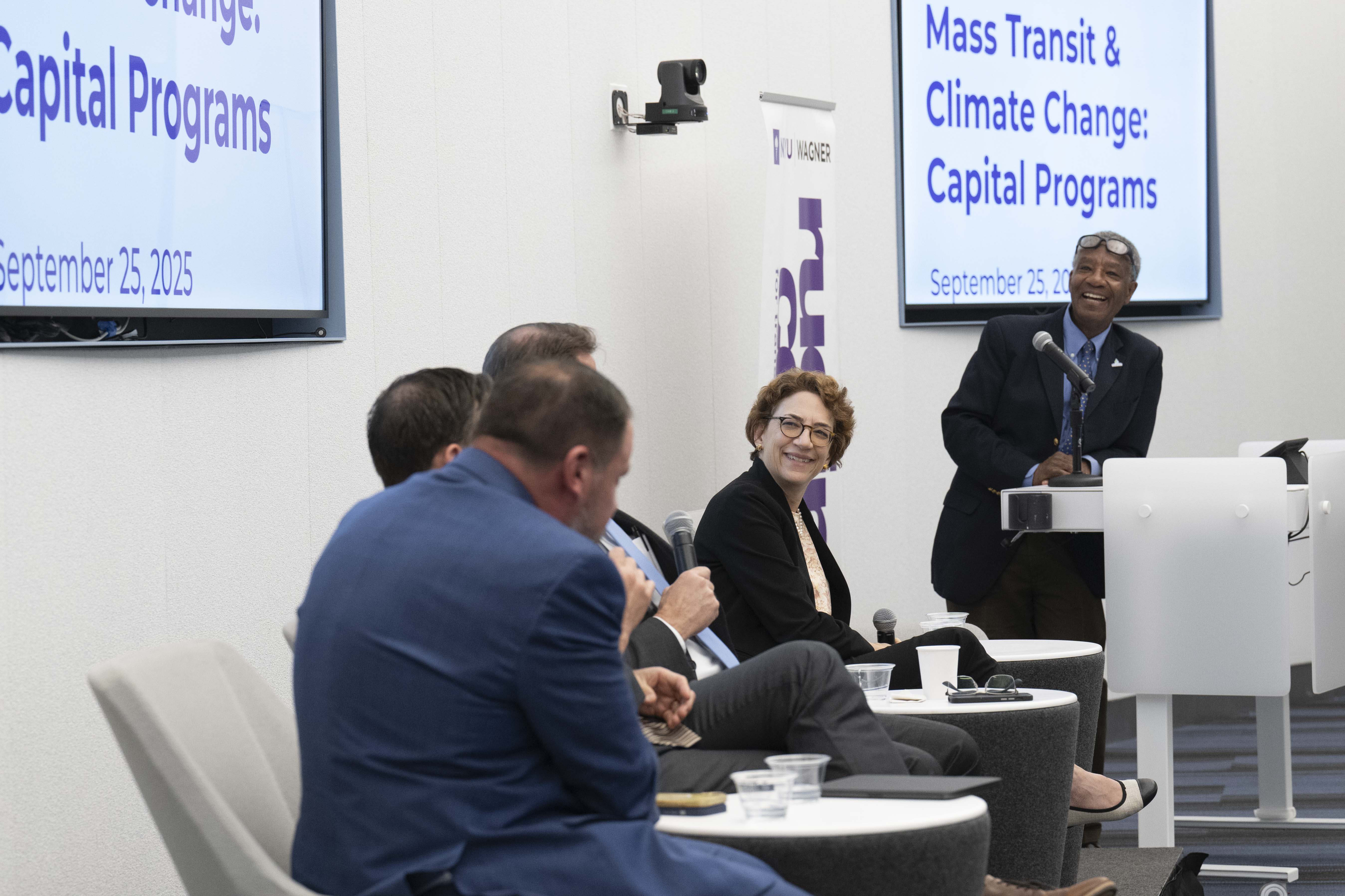
To close, moderator Ernest Tollerson asked which agency should take the lead in shifting freight transport from roads to waterways—a strategy known as the “Blue Highway.” Panelists agreed that the Port Authority is best positioned to spearhead this initiative.