

Alumni Spotlight: Betty Zhong (EMPA 2019)
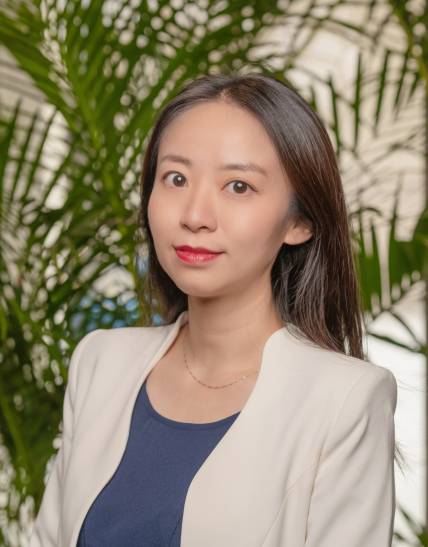
BETTY ZHONG (EMPA 2019), SENIOR MANAGER OF CLIMATE CORPS GLOBAL PROGRAMS, ENVIRONMENTAL DEFENSE FUND
Betty's background lies in sustainable development, climate science, and policy analysis. Her experience spans roles in the U.S. Department of State, New York City government, and environmental nonprofits in China. After honing her expertise at Wagner, she has gone on to work for the Environmental Defense Fund, a leading global environmental advocacy group.
As Senior Manager for Climate Corps Global Programs, you lead the strategic growth of the fellowship program in China and India. Could you tell us a bit about what your role entails? What do you enjoy most about it?
In my role as Senior Manager for Climate Corps Global Programs, I work closely with our global program senior director as well as our local teams in China and India to design and implement program strategies that are responsive to each country’s unique context. A big part of my work is bridging global vision with local execution—ensuring that our fellowship model remains consistent in quality while also being adaptable to different markets, partners, and talent pipelines.
Because I collaborate across the U.S., China, and India, I’m able to bring my cross-cultural perspective and bilingual skills into everything I do—from program planning and stakeholder engagement to troubleshooting and problem-solving. No two days are exactly the same, which keeps the work both challenging and energizing.
What I enjoy most is the tangible impact of the program on people’s careers and on the broader climate movement. Over the past 18 years, nearly 2,000 fellows have graduated from Climate Corps global programs, and many of them are now working in sustainability and climate-related roles around the world. Seeing how the program helps individuals launch meaningful careers—and knowing that their work is contributing to real climate solutions—makes this work incredibly rewarding. It’s not just about running a program; it’s about building a global community of leaders who are driving change in many different ways.
Your academic and professional footprint is remarkably broad, spanning China, the U.K., the U.S., and India through your work with the EDF. How has this shaped your perspective on environmental policy?
My academic and professional journey across China, the U.K., the U.S., and India has given me a truly global lens on environmental policy. I earned my first master’s degree in Environment, Science and Society from University College London, after completing a bachelor’s in International Business Communication. That combination—bridging science, policy, and communication—has shaped how I approach this field: not just as a technical challenge, but as one that requires cross-sector collaboration and cultural understanding.
Over the past years working in both grassroots and international environmental organizations, I’ve witnessed a significant shift in how climate action is framed and who is involved. In the early 2000s, environmental efforts were largely driven by developed countries. Today, climate action is a truly global priority, with increasing urgency and participation from emerging economies.
This is where countries like China and India play a critical role. Together, they represent more than one-third of the world’s population, and their engagement is essential to any meaningful global climate solution. What’s been particularly encouraging is not just the scale of participation, but the pace of change—how quickly businesses, governments, and young professionals in these countries are stepping into climate leadership.
Through our work at EDF, especially by bringing the Climate Corps program to India in 2021, I’ve seen this transformation firsthand. Over the past several years, we’ve observed rapidly growing demand from companies seeking sustainability talent, alongside a new generation of young people who are deeply committed to building careers in climate and environmental work.
All of this has reinforced my belief that effective environmental policy must be globally informed but locally grounded—and that investing in talent and capacity-building across regions is just as important as advancing policy itself.
Early on in your journey, you served as a U.S.-China Environmental Justice Fellow examining how climate change disproportionately impacts minority and low-income communities in both countries. Looking back, are there lessons from that experience that you still carry into your work today?
I was selected for the U.S.-China Environmental Justice Fellowship in 2010, at a time when I was working as an Assistant Engineer focused on Environmental Impact Assessment in China. That experience was truly formative. It gave me the opportunity to see, firsthand, how environmental degradation and climate change disproportionately affect vulnerable communities—particularly low-income and marginalized groups—in both countries.
What struck me most was how similar the challenges were, despite very different political and economic systems. In both the U.S. and China, the communities with the least resources often faced the greatest exposure to pollution and climate risks, while also having the fewest avenues to influence decision-making. That realization fundamentally shaped my understanding of environmental work—not just as a technical or policy issue, but as one deeply tied to equity and justice.
This experience affirmed my decision to build a career in the nonprofit sector. I went on to work with a grassroots organization focused on environmental data disclosure, where we aimed to make environmental information more publicly accessible. That work reinforced another key lesson I still carry today: transparency is critical for accountability, and empowering communities with information is a powerful lever for change.
After nearly a decade in the public and nonprofit sectors, I decided to pursue a second master’s degree in Public Administration at NYU Wagner. That experience allowed me to step back, deepen my policy and management skills, and learn from an incredibly diverse community of faculty and peers.
Looking back, the fellowship instilled a perspective that continues to guide my work today: that climate solutions must be inclusive, that equity should be at the center of program design, and that building pathways—whether through policy, data transparency, or workforce development—for underrepresented communities to participate in climate action is essential for lasting impact.
You're a long-time volunteer with GrowNYC. What has kept you coming back, and what role do these types of service-based programs play in the broader climate movement? For those of us looking to get involved, where’s a good place to start?
I first came across GrowNYC shortly after I moved to New York. I discovered it at a local weekend Greenmarket, where I learned about their food scrap collection program. I started bringing my own food scraps to the market for composting, which was my first small but tangible step into local climate action. That experience even inspired me to write a course paper on New York City’s brown bin composting program during my studies at Wagner.
What has kept me coming back is the sense of connection—both to the community and to the impact. Environmental work can sometimes feel abstract or large-scale, but programs like GrowNYC make it very immediate and visible. You can literally see the cycle: from food waste to compost, and then back to supporting local agriculture.
Over time, I became more involved by attending a volunteer training workshop and signing up for different activities. GrowNYC regularly shares opportunities through newsletters, and there are volunteer roles across all five boroughs, which makes it very accessible. I’ve done everything from assisting with selling locally grown vegetables in lower-income communities in Lower Manhattan to helping with food scrap collection. I especially enjoyed working in underserved neighborhoods, where increasing access to fresh, affordable produce can make a real difference in people’s daily lives.
These kinds of service-based programs play an important role in the broader climate movement. They bring climate action down to the local level, create opportunities for community engagement, and help people build habits that contribute to more sustainable systems. They also make climate work more inclusive—anyone can participate, regardless of their background or profession.
For those looking to get involved, I’d suggest starting by exploring organizations like GrowNYC or similar groups in your area online. Most have clear information about their programs and volunteer opportunities. Try signing up for one or two activities to see what resonates with you. For me, I found genuine joy and fulfillment in these experiences, and they’ve remained an important part of how I stay connected to climate action beyond my professional work.
In honor of Earth Day, what is one trend or opportunity that you think we should be paying more attention to right now?
In honor of Earth Day, one area I think we should be paying much more attention to is climate adaptation and resilience. While mitigation—reducing emissions—remains critical, we are already experiencing the impacts of climate change in very real ways, from extreme heat and flooding to supply chain disruptions and public health risks. The question is no longer just how we prevent future damage, but how we prepare for and respond to the changes that are already happening.
What’s encouraging is that climate adaptation is becoming more tangible and actionable at the local level. Cities, companies, and communities are starting to invest in resilience strategies—whether that’s climate-resilient infrastructure, better data and early warning systems, or rethinking how we design buildings and manage natural resources. There’s also a growing recognition that resilience is not just an environmental issue, but an economic and social one.
I’m particularly interested in the opportunity to build a workforce that is equipped to support this transition. We need more professionals who understand both climate risks and practical solutions—people who can translate data into action, design resilient systems, and work across sectors. This is where programs like Climate Corps can play a role, by preparing the next generation of talent to help organizations adapt and build resilience in meaningful ways.
Ultimately, focusing on adaptation and resilience is about making climate action more immediate, inclusive, and grounded in people’s everyday lives. It’s an area where we can drive impact now, while continuing to work toward long-term climate goals.
What advice would you give current Wagner students who are looking to pursue a career in global climate action?
I would definitely encourage Wagner students to explore opportunities like the Climate Corps fellowship program. It operates across the U.S., China, and India, and offers a unique entry point into global climate action. The program provides hands-on experience working with companies and organizations on real sustainability challenges, which is incredibly valuable if you’re trying to translate academic learning into practical impact.
More broadly, my advice is to be intentional about building both technical knowledge and real-world experience. Climate work is inherently interdisciplinary—it sits at the intersection of policy, business, science, and social impact—so the more you can develop a well-rounded skill set, the better positioned you’ll be. Programs like Climate Corps are helpful because they expose you to this complexity early on.
I’d also encourage students to think globally but stay grounded in local contexts. Climate solutions don’t look the same everywhere, so having cross-cultural awareness and, if possible, international experience can be a real asset. Even if you start locally, understanding how your work connects to global systems is important.
Finally, don’t wait for the “perfect” opportunity. Try different roles, internships, or volunteer experiences to see what resonates with you. The climate space is evolving quickly, and there are many entry points. What matters most is getting started, staying curious, and being open to learning as you go.