

Alumni Spotlight: Elizabeth Olsson (MPA-PNP 2011)
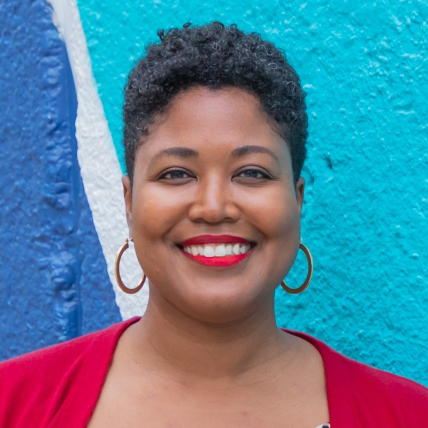
Elizabeth Olsson (MPA-PNP 2011), director of community grants, Marguerite Casey Foundation
Elizabeth is a philanthropic and nonprofit leader whose career has centered on advancing racial equity through systems change, community partnership, and public service. A Wagner alumna, she has held roles at organizations including the Legal Defense Fund, Schusterman Family Philanthropies, and community-based nonprofits, and currently works at the Marguerite Casey Foundation, where she supports state and local organizing efforts to advance racial and economic justice. Drawing on experience across direct service, policy advocacy, and grantmaking, Elizabeth’s work focuses on centering directly impacted communities and strengthening the leadership of those closest to the ground.
Your career spans philanthropy, nonprofit leadership, and public service, with a consistent focus on racial equity. What has shaped your commitment to this work?
I was fortunate enough to have access to a high-quality post-secondary education, which opened many doors for me. Recognizing that far too many Black and Brown children and youth lacked this access initially led me to pursue a career focused on promoting racial equity within education systems. I also have family members who have been impacted by the criminal legal system, which allowed me to gain a deeper understanding of the injustices within that system as well. Ultimately, I realized that all these issues are interconnected, which led to my desire to work to address systemic racial inequity more broadly.
Across roles at organizations like the Legal Defense Fund, Schusterman Family Philanthropies, and community-based nonprofits, you’ve worked closely with those directly impacted by systemic inequities. How has partnering with grassroots leaders and community members shaped how you approach leadership and decision-making?
I deeply believe that the people who are most impacted by social problems should be centered in decision-making processes. I first realized just how often directly impacted communities are excluded from decision making as the Senior Policy Associate for the Legal Defense Fund, where I worked closely with a coalition of grassroots advocates working to end the school-to-prison pipeline. I saw how my position at a large, national organization gave me access to decision-making tables that those directly impacted leaders didn’t have access to. My current approach to leadership and decision making is to make sure to rely on the expertise of those closest to the ground and to support efforts that strengthen the leadership of directly impacted individuals.
In your current role at the Marguerite Casey Foundation, you continue to advance racial justice through strategy, education, and relationship-building. What are you most focused on right now, and what impact are you hoping to achieve?
At the Marguerite Casey Foundation, our vision is a country where government prioritizes the needs of excluded and underrepresented communities. Our Community Grants portfolio supports state and local community organizing that brings people together to tackle deep-rooted inequities that impact their lives. Our grant recipients are working on a wide range of issues, including protecting the rights of immigrants, securing adequate funding for public education, and ensuring that low-income tenants have access to safe and affordable housing. Through their work, we’ve seen powerful examples of what it looks like when governments serve the needs of everyday people, not just the rich and politically powerful. I hope to continue to see more of these examples, and I hope to see more national foundations prioritize funding community organizing given its critical role in driving systemic change.
How did your time at Wagner influence your understanding of racial equity and public leadership, and in what ways do you still draw on that experience in your practice today?
My time at Wagner definitely influenced my understanding of how to promote racial equity and social change. When I first started my program, I had previously only worked for direct service organizations. I thought that if we could just replicate enough good programs then we could ensure that all children and families have access to the resources and support they need to be successful. It wasn’t until my first policy class at Wagner that I realized that if I wanted to impact as many people as possible, I needed to focus on systems change. That led me to shift first from direct service to policy advocacy and then ultimately to grantmaking focused on changing systems to advance racial equity and social justice.
What advice would you offer current students who want to build careers in philanthropy?
Philanthropy can be a hard field to break into. I applied to many roles with foundations over the course of several years before I was finally hired as a program officer. A couple of things that supported my transition were informational interviews and building relationships with staff at foundations I was interested in and joining a foundation board to gain more insight into equitable grantmaking. I also believe my years of experience working with the types of organizations funded by the foundations I’ve worked with, as well as my lived experience, has been helpful.