

Alumni Spotlight: Lourdes Zapata (MPA 1993)
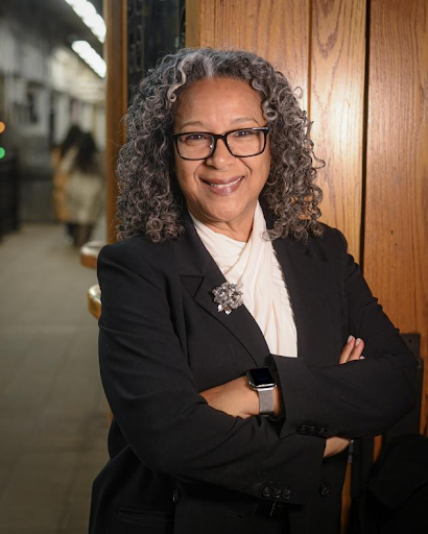
Lourdes Zapata (MPA 1993), chief diversity and inclusion officer, Metropolitan Transportation Authority (MTA)
Lourdes Zapata serves as the MTA Chief Diversity & Inclusion Officer (CDIO), after leading the South Bronx Overall Economic Development Corporation, locally known as SoBro.
As the MTA’s CDIO, Zapata is charged with ensuring equitable access to economic opportunities for Minority and Women Business Enterprises (MWBEs) and eliminating barriers to their participation in obtaining MTA contracts and supporting equal opportunity for MTA employees.
Prior to joining SoBro, Zapata was appointed by Gov. Andrew M. Cuomo as Chief Diversity Officer for the State of New York, where she was engaged in policy and program development to increase the participation of women and people of color in all areas of State government. She also served the State as Executive Vice President of the Division of Minority and Women’s Business Development at Empire State Development. Her responsibilities included the development and oversight of statewide MWBE procurement policy as required by Article 15A of the Executive Law. She oversaw the Division’s certification, compliance and business development activities, and worked with State Commissioners and the Legislature on matters affecting the MWBE community. Her public service also extends to her earlier tenure as Community Development Director for the City of Newburgh in Orange County.
Born and raised in the Bronx, Zapata received her Master’s Degree in Public Administration from NYU Wagner and her Bachelor’s Degree from Hood College in Frederick, Maryland.
What inspired you to commit your career to public service, and what’s the mission that drives it?
As a proud Bronx-born and raised Latina, I grew up understanding both the resilience of our communities and the barriers they face. Public service became a way to turn lived experience into structural change. My mission has always been to expand access — to capital, contracting opportunities, business supports, personal and professional development, jobs, and decision-making power—so communities that have historically been excluded, like my community, can fully participate in and benefit from economic growth.
How did your time leading SoBro shape your perspective on economic development and community impact?
Leading SoBro grounded me in place-based economic development. I saw firsthand that growth without equity can accelerate displacement. True community impact requires investing in small businesses, workforce pipelines, and affordable housing simultaneously. It also requires listening deeply to residents and building strategies with community, not for it. SoBro was an instrumental nonprofit organization leading workforce, youth and economic development activities in the South Bronx community of my youth for decades. It was an honor to lead an organization which had as its mission focus a vision of improving the lives of this long-overlooked community and the amazing people that lived there.
You’ve overseen MWBE procurement policy and implementation at multiple levels of government. What are the biggest structural barriers facing MWBEs today, and how can public institutions address them more effectively?
MWBEs and small businesses are essential to the fabric of our city and state. They create local jobs, build generational wealth, and reinvest in the neighborhoods where they operate—supporting other small businesses, hiring locally, and strengthening community stability. When they succeed, entire communities thrive.
Yet despite their vital role in our economic health, these businesses continue to face significant barriers. Access to capital remains constrained due to limited availability, volatile financial markets, discouraged borrowing histories, and the ongoing reality that many communities still lack strong relationships with local banking institutions that understand their needs. For firms seeking to compete in public contracting, bonding and insurance requirements, slow payment cycles, and overly complex procurement processes present additional obstacles. Many MWBEs are also excluded from the relationship-driven networks where major opportunities are shaped.
I am proud of the work I’ve been part of in government and at the MTA to advance legislation, policy, and programs that address these challenges through creative, systemic solutions. Public institutions can and should continue to simplify procurement processes, unbundle large contracts, enforce prompt payment, expand access to capital, provide targeted technical assistance, and hold prime contractors accountable for meaningful participation—not merely aspirational goals. If we are serious about inclusive growth, we must treat MWBE participation not as a compliance exercise, but as a core economic development strategy that drives shared prosperity.
As Chief Diversity & Inclusion Officer at the MTA, what does meaningful access to opportunity look like in practice—for both MWBEs and employees?
The Metropolitan Transportation Authority is the largest transportation network in North America, employing more than 75,000 people and serving 14 counties across New York and Connecticut, with over 15.3 million riders annually. Each year, it awards more than $1.2 billion in contracting opportunities to small businesses, including MWBEs, DBEs, and SDVOBs. Its economic and community impact is significant, far-reaching, and deeply embedded in the region it serves.
For the MTA, meaningful access to opportunity means transparency, accountability, and clearly defined pathways to participation and advancement. For MWBEs, it means real contract opportunities, intentional capacity-building, on-time payment, and consistent engagement that allows firms to compete and grow. For employees, it means equitable hiring and promotion practices, leadership development pipelines, and workplace cultures where diverse voices help shape decisions—not just representation on paper.
Over the past several years, significant work has been done to institutionalize these priorities. With strong support from the most senior leadership, inclusive growth and equal opportunity principles have been embedded into the agency’s strategic goals, performance metrics, and capital planning processes. This has not been peripheral work—it has been mission-driven and aligned with the MTA’s broader responsibility to serve a dynamic and diverse region. Sustained attention, data-driven accountability, and cross-agency collaboration have been critical to moving from intention to measurable impact.
Reflecting on your tenure at the MTA, which initiatives do you feel have had the most meaningful impact? Looking ahead, where do you see the greatest opportunity for the agency to evolve?
Strengthening MWBE goal-setting, improving data transparency, and embedding equity metrics into agency performance created lasting infrastructure for accountability. The greatest opportunity ahead lies in integrating equity into capital planning and climate resilience investments—ensuring that as the system modernizes, opportunity and mobility expand for underserved communities and diverse businesses alike. That’s a challenge I’m proud to say we have fully embraced and intend to meet as the agency implements its 2025-2029 Capital Plan which will invest over $68B in this system.
As an NYU Wagner alumna, how did your MPA experience prepare you for leadership roles in government and public authorities?
My time at NYU Wagner's Graduate School of Public Service sharpened both my policy lens and management toolkit. The MPA program emphasized data-driven decision-making, financial management, and ethical leadership—skills essential for navigating complex public systems. Just as importantly, it reinforced that equity must be central to public administration, not peripheral to it.
Diversity and Inclusion efforts have faced stiff headwinds over the last couple of years. What advice would you give to new graduates looking to become established in this space?
Ground your work in data, law, and operational excellence. Equity work is strongest when it’s tied to performance, compliance, and measurable outcomes. Build cross-sector fluency—understand finance, procurement, HR, and policy. And stay anchored in purpose. Progress in equity has never been linear, but leaders who combine courage with competence will continue to move institutions forward.