

Alumni Spotlight: Terri Levine (MHA 2021)
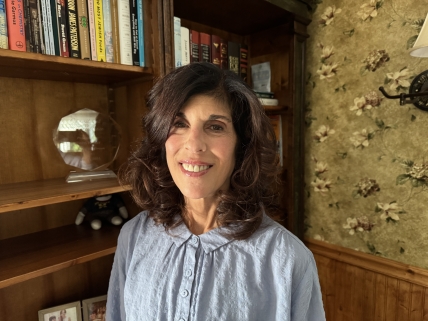
Terri Levine, MHA, JD, MSILR, assistant vice president, Mount Sinai Hospital
An established labor and employee relations professional with degrees in law and industrial relations, Terri Levine, MHA, JD, MSILR (MHA 2021) earned her Master of Health Administration from NYU Wagner to deepen her operational perspective on the healthcare industry. Now serving as a healthcare leader at Mount Sinai, she leverages her experience to build collaborative, win-win solutions between employees and administrators through empathetic leadership and a growth mindset.
What inspired you to attend NYU Wagner, and how did that experience shape your career goals?
I had been working in labor and employee relations for many years, the last 14 years in healthcare, and I realized that I wanted to understand more about the operational side of the industry. I understood the workforce challenges, but I wanted a broader perspective on how I understood the workforce challenges, but I wanted a broader perspective on how healthcare organizations function and how decisions are made.
Going back to school after having an established career was a wonderful experience. NYU Wagner gave me an opportunity to learn from professors and classmates who brought very different perspectives to the classroom. It helped me see healthcare through a wider lens and reminded me how important it is to continue learning, no matter where you are in your career.
I didn't go to Wagner to change careers. I went because I wanted to become better at what I was already doing, and I believe the experience helped me do exactly that.
Is there a class, professor, or connection from NYU Wagner that continues to influence you today?
Without question, my classmates. We had such an unusual graduate school experience because of the pandemic. We met in person at orientation, and then spent almost our entire time together on Zoom.
You might think that would have made it difficult to develop relationships, but in many ways, I think it brought us closer. We were all navigating the uncertainty of the pandemic while balancing school, work, and our personal lives. We got to know one another through our discussions, shared experiences, and the challenges we faced together.
I loved hearing about everyone's professional journeys and the different paths that brought us to Wagner. I learned so much from my classmates, and I still think about those conversations.
When we finally came together in person for graduation in 2022, it was particularly special. After spending so much time together virtually, being able to celebrate in person was something I will always remember.
Looking back at your career journey, what turning point helped lead you to your work at Mount Sinai?
I have spent most of my career in labor and employee relations, working in government, private practice, and healthcare. Each experience taught me something different, but I found healthcare to be especially meaningful.
There is something unique about working in an industry where the work everyone does, regardless of their position, ultimately affects the care of another human being. I have always believed that creates a special responsibility for everyone who works in healthcare.
When the opportunity arose to join Mount Sinai, I was excited by the complexity of the organization and its extraordinary history. With its hospitals, medical school, and contributions to medical research, it is a place where so much important work happens every day.
What I enjoy most is that no two days are alike. The challenges can be complicated, and the decisions are not always easy, but I feel fortunate to work with talented, dedicated people who genuinely care about what they do.
What is a project or accomplishment you’re especially proud of, and what made it meaningful to you?
Over the years, I've negotiated many labor agreements, and while I'm proud of those accomplishments, the ones that mean the most to me are those where we find solutions that genuinely benefit both employees and the organization.
One example that stands out is negotiating changes to paid time off provisions at Mount Sinai. We were dealing with challenges related to unscheduled absences, which affected hospital operations and placed additional demands on other employees. By approaching the issue collaboratively and finding a creative solution, we were able to negotiate changes that helped address those challenges while recognizing the importance of employees having time away from work. The result was a reduction in unscheduled absenteeism of approximately 30%.
What made this particularly meaningful was that it demonstrated something I've always believed: labor relations doesn't have to be about one side winning and the other losing. Some of the best outcomes happen when people are willing to listen, understand each other's concerns, and find common ground.
For me, that's one of the most rewarding parts of my work. It's not simply about reaching an agreement. It's about building relationships, solving problems, and hopefully leaving things a little better than you found them.
What has working in healthcare taught you about leadership and building trust with others?
One of the most important things I have learned is that people want to be heard, respected, and treated fairly. That sounds simple, but it can be surprisingly difficult in a large, complex organization.
In my work, I deal with disagreements every day. People often have very different views about what is fair or what the right decision should be. I've learned that you don't have to agree with someone to respect their perspective, and you can have a difficult conversation without damaging a relationship.
I also believe that trust is built by doing what you say you're going to do. People may not always like your decisions, but if they know you are honest, consistent, and willing to listen, they are much more likely to trust you.
Over the years, I've also learned the importance of not taking disagreements personally. In labor relations, that's particularly important!
Ultimately, I think good leadership comes down to treating people the way you would want to be treated, being willing to make difficult decisions, and never losing sight of the fact that everyone has their own experiences and challenges.
What advice would you give current NYU students who are still figuring out their career path?
I would tell them not to worry so much about having everything figured out.
If someone had told me early in my career that I would eventually become an attorney, teach law school, work in government, and then build a career in healthcare leadership, I probably would not have imagined that path for myself.
Careers rarely follow a straight line, and that's not necessarily a bad thing. Some of the most valuable experiences I've had came from opportunities I hadn't originally planned to pursue.
I would encourage students to stay curious, take chances, and be open to learning from everyone they meet. Don't be afraid to try something different, and don't assume that you have to know exactly where you want to end up.
I would also remind them that it's never too late to learn something new. I went back to graduate school after many years in the workforce, and it was one of the most rewarding experiences of my career.
Most importantly, find something that interests you and gives you a sense of purpose. Success is wonderful, but enjoying what you do and feeling that your work matters is just as important.