

NYU Wagner Course Translates NYC Institutions into Big-Picture Learning
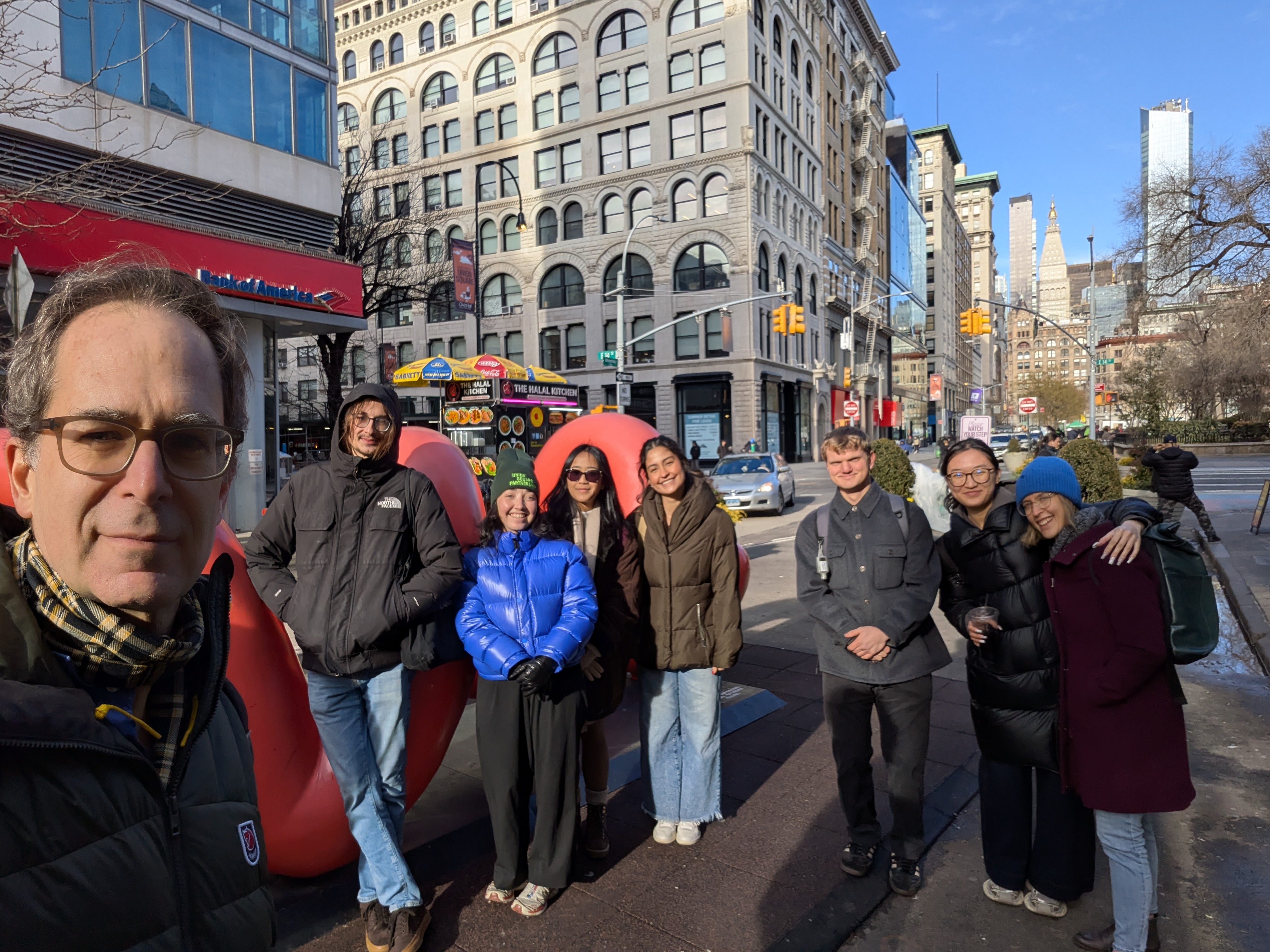
Urban Planning and Public Administration students may already be familiar with many of NYC’s most significant public service organizations , but NYU Wagner’s “Institutions, Governance, and International Development” (IGID) course converts these entities into laboratories for hands-on learning and professional networking.
The course, led by Associate Professor of Urban Planning and Public Service Salo Coslovsky, explores how to build effective institutions that promote and sustain international economic development. Visits to notable NYC organizations, led by Wagner alumni hosts, serve as models of effective governance and allow students to learn directly from alumni serving in impactful roles.
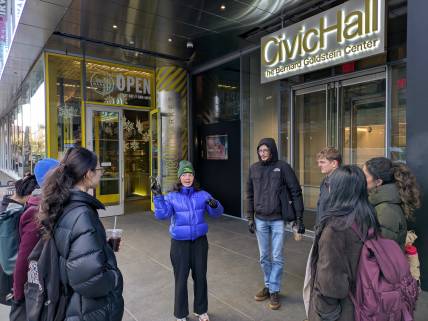
During this year’s January term, students had the opportunity to go on field visits to:
- Union Square Partnership, led by Sally Burns (MUP 2022)
- New York City Economic Development Corporation, led by J.R. Reed (MUP 2023) and Campbell Munn (MUP 2025)
- New York State Green Bank, led by Kate Dunn (MPA-PNP 2023), Andrew Schons (MPA-PNP 2021), and Ben Goodwin (MPA-PNP 2023)
- New York City Office of Management and Budget, led by Clara Smith (MUP 2025) and Jenna Dyer (MPA-PNP 2025)
These institutions illustrate government organizations’ and nonprofits’ roles in promoting economic development, in partnership with private businesses.
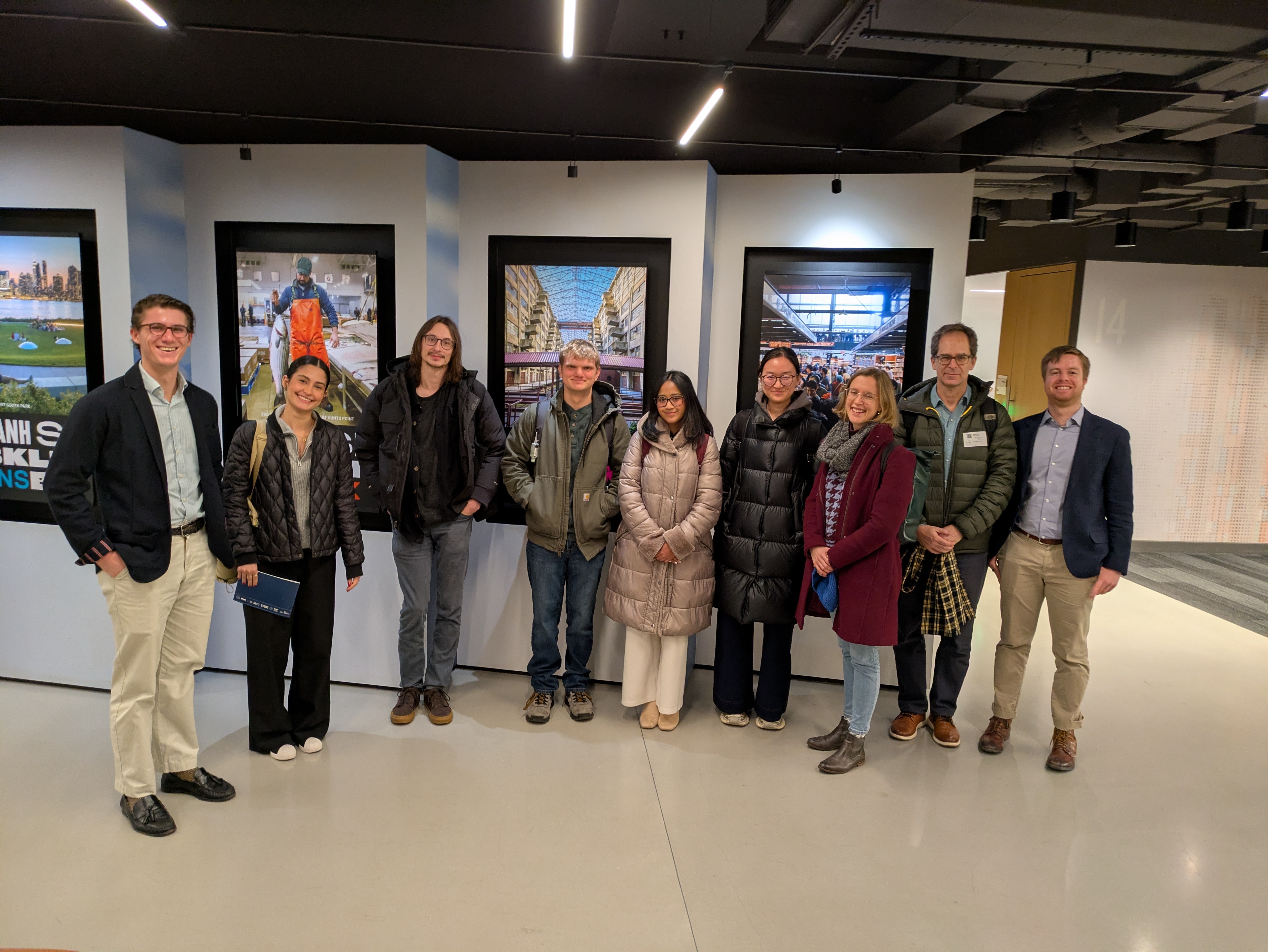
“One of the key advantages of being in New York City is our ability to take a short subway ride and visit alumni who are already doing the kinds of things we study in class, like how to foster a vibrant neighborhood, promote green businesses, or monitor the use of public funds”, explained Salo Coslovsky. “These are the kinds of challenges that confront public leaders everywhere, transcending the typical national-international divide.”
Added Difa Farzani (MPA-PNP 2027), a student in the course: “Coming from Indonesia, a developing country with a large and complex emerging market, the IGID course pushed me to think more critically about the relationship between markets and institutions. It helped me better understand when and how policy, regulation, and public investment can complement markets to produce broader social and economic outcomes.” Farzani shares more about her experience in the course in a blog post.
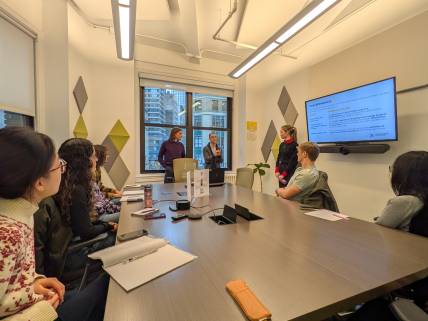
IGID emphasizes interactive, hands-on learning and discussion, encouraging students to consider theories and practices in a variety of real-world contexts.
“The visits were a great way to see how our thoughts and readings can be applied on real life issues and also what additional questions [or] potential tensions show up when actually implemented,” said Bettina Birkner (EMPA 2026), a student in the course.
This off-site learning also enriched students’ experience in the classroom by prompting lively in-class conversations, said Albert Osterman (MPA-MAIR 2027), another student in the course.
Connecting with the Wagner alumni hosts helped students see how their academic learning is put to use in practical applications. It “made the course feel very grounded in real-world practice. Hearing about their career paths and day-to-day decision-making helped bridge the gap between theory and application, and showed how the frameworks we discussed in class continue to shape professional judgment across sectors,” Farzani said.