

PIT in Focus Brings Students and Practitioners Together to Explore Technology for the Public Good
By Chinazam Okorie (MPA 2027)
How can technology strengthen public services while protecting the interests of the people who use them? That question brought students and practitioners together at NYU Wagner on November 3 for “Community Meetup: Public Interest Technology (PIT) in Focus.”
Hosted by Wagner Public Interest Technology and Wagner CityGov, with support from the NYU Alliance for Public Interest Technology, the event explored the connections between technology, public accountability, and community participation.
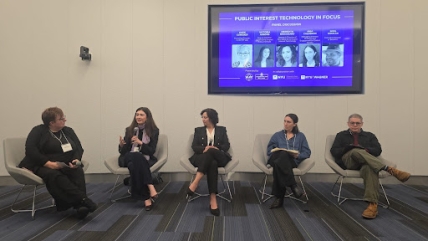
Moderated by Katie Cumiskey, director of the CUNY Public Interest Technology Lab, the panel featured Meredith Broussard, data journalist and research director at the NYU Alliance for Public Interest Technology; Ania Calderon, managing director of strategy and engagement at Data & Society; Noel Hidalgo, executive director of BetaNYC; and Victoria Aarons, deputy director of Fedcap’s Community Impact Policy Institute.
The conversation emphasized the importance of understanding people and institutions before introducing technological solutions. Drawing on her work in algorithmic accountability reporting, Broussard explained how journalism’s responsibility to hold power accountable extends to the algorithms increasingly involved in consequential decisions. Building effective systems, she emphasized, requires understanding the human systems in which they operate.
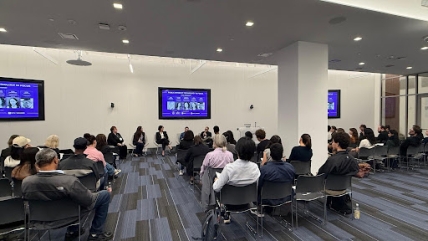
Calderon discussed how research can inform technology policy and give the public greater influence over decisions about who benefits from technological change and who bears its risks. She also highlighted the value of translating complex technical questions into accessible information that policymakers and communities can use.
For Hidalgo, public interest technology is closely connected to accessible government information, responsive services, and meaningful opportunities for civic participation. In considering government adoption of AI, he encouraged attention to whether decisions can be reversed and how institutions can address harm when systems fail.
The discussion also examined technology’s role in education and workforce development. Panelists stressed the importance of drawing on evidence about how people learn, addressing practical barriers to access, and preserving creativity, critical thinking, and autonomy.
For students exploring careers in the field, the panel offered several starting points: learn how to learn, develop the ability to communicate across disciplines, understand policy and budgeting, and participate in community life. Curiosity and the willingness to engage with unfamiliar problems emerged as valuable foundations for the work.
Audience questions extended the conversation to agency: how people can retain meaningful choices as automation becomes more widespread, and how educators can support student autonomy while continuing to learn themselves.
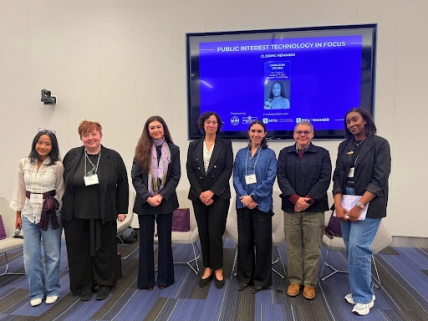
The evening concluded with networking and refreshments, giving attendees an opportunity to continue the discussion and build connections across institutions and disciplines. Throughout the event, a shared message emerged: serving the public through technology requires listening to communities and ensuring they have a voice in shaping the systems that affect their lives.