

Student Spotlight: Lea Lepik (MPA/MA-IR 2026)
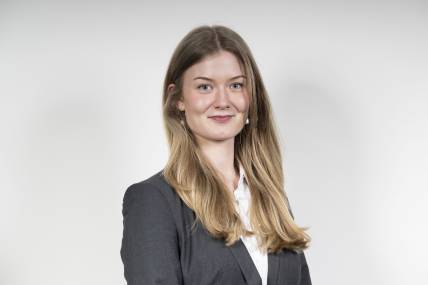
Lea Lepik (MPA/MA-IR 2026), Vice President, Wagner Womxn
Lea Lepik is an advocate for gender equality and a graduate student in NYU’s dual MPA/MA program, specializing in International Development Policy and International Affairs. Having lived and worked in North America, Europe, and Southeast Asia, she brings a unique lens to her work at the intersection of foreign policy and sustainable development. With a professional background that includes advising at the Permanent Mission of Estonia to the UN and researching gender barriers for the Estonian Commissioner of Gender Equality, Lea is passionate about strengthening women’s leadership in global governance and leveraging social impact investing to drive systemic change.
At Wagner, Lea serves as the Vice President of Wagner Womxn (WW), a student group dedicated to creating spaces for dialogue on issues affecting womxn and gender-expansive people. Whether she’s supporting the group’s mentorship program or hosting community-building "skill-shares," Lea is committed to fostering an inclusive environment where students can connect, advocate for gender equity, and build lasting professional networks.
What drew you to pursue a dual MPA/MA degree at Wagner, and how have your programs in International Development Policy and International Affairs sharpened your focus on foreign policy and gender equality?
The MPA/MA-IR program offered me the best of both worlds: the opportunity to study international relations, which engages with the history and debates that shape our current international political landscape, and learn about international development, a field which offers guidance on how to ethically and responsibly work towards reducing inequality. One of the ways it has sharpened my focus on foreign policy and gender equality is in allowing me to explore this thematic area both theoretically (in international relations) and practically (in international development). I view these programs as mutually reinforcing one another, as without my engagement in international development, my knowledge of history and theory risks being misapplied—and without my engagement with international relations theory, my work in international development risks being uninformed.
You’ve studied in Canada and Belgium and worked abroad before landing here in New York. How have these international experiences shaped your perspective on public service?
While I don't think you need to have lived or worked in a foreign country to work in public service, I believe it can be transformative. Growing up almost exclusively in countries that I didn't hold citizenship in left a substantial impact on not only how I view the world, but how I move through it. Knowing I didn't belong to the national and cultural "in" group instilled in me a permanent sense of disbelonging or "otherness," the acceptance of which allowed me to start noticing and celebrating diversity in ways I may otherwise not have been able to. Because of my own upbringing and how difficult it is to succinctly answer the question of where I'm "from" (are they asking where I was born? Where I grew up? Where I currently live? What my nationality is? The answers to those questions are all different!), I developed an acute curiosity towards the ways other people's lives are shaped by personal and global circumstances. Ultimately, while I had no say over where I lived and when I moved until I was 18, I credit my upbringing with fostering in me the empathy, humility, and awareness that keeps me grounded in the purpose of public service.
You stepped into the role of vice president of Wagner Womxn this year after serving as events & communications chair the year before. What has this leadership experience taught you about building community at Wagner?
This leadership experience, like the ones I have held before, has been a very valuable and instructive one. The most challenging aspect so far has been learning how to balance all the competing priorities in my life without sacrificing my engagement with Wagner Womxn. While juggling school, work, and everything else, is difficult, being surrounded by people as motivated, passionate, and kind as the Wagner community makes building community a relatively light lift. Just a few weeks ago, we hosted a Galentine's crafting and skill-share event, and it was so energizing to see the room fill up instantly. A perfect reminder of how much appetite there is for spaces where we can simply show up and support one another.
In your view, what are the biggest barriers to strengthening women’s leadership in global governance, and what strategies show the most promise in overcoming them?
It's easy to recognize how undervalued (and consequently underfunded) work related to gender equity is globally. The double-bind of working towards gender-equity is in having to prove it is an area worth funding before you even get to do any work. While feminist scholars can point to empirical evidence suggesting there is a linkage between the security of states and the security of women, getting buy-in from those in power is not politically feasible if there already exists doubt about the value of gender-focused initiatives. Ultimately, strategies that center long-term investment in women’s education, leadership pipelines, and inclusive decision-making structures consistently show promise. Notably, the campaign "1 for 8 billion" is mobilizing to influence the selection of the next UN Secretary General, a position never before held by a woman. While I don't believe that electing a woman would translate into feminist commitments being pursued, it would nevertheless challenge prevailing assumptions about women's capacities to lead, which would have ripple effects across institutions and help normalize women’s presence in the highest levels of global governance.
Looking ahead, what kind of impact do you hope to make in the field of international development, and how has your experience at Wagner prepared you for that next step?
Like many of my peers at Wagner, I want to leave a positive impact. Aside from the important, "marketable" skills we're taught, one of the best resources I have gained through my experience at Wagner is the network. The unwavering support I have received from my peers, professors, and the wonderful Wagner staff has reassured me that regardless of how daunting the political landscape may look, there will always be the people who share a commitment to serving others, and ultimately want to help you succeed.
What Wagner Womxn initiatives are you most excited about, and how can students get involved to support your mission?
I'm most excited about our mentorship program, which is launching this month. The program connects current students with alumnae and peers in a supportive group designed for questions and building community beyond the classroom. Past participants have appreciated the opportunity to learn from mentors who were once in their shoes and develop meaningful, lasting connections within their career paths. Check out our Instagram (@wagnerwomxn) for updates and information on how to participate!