

Student Spotlight: Robyn James (MPA-PNP 2026)
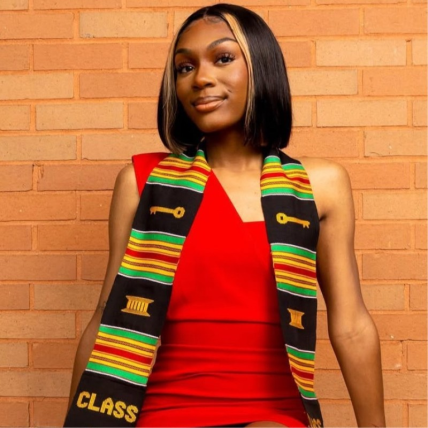
Robyn James (MPA-PNP 2026), Chair, NYU Wagner Black Student Association (BSA)
Robyn James is a Master of Public Administration student in NYU Wagner’s Public & Nonprofit Management (PNP) program with a specialization in Advocacy & Political Action, and currently serves as Chair of the Black Student Association (BSA). With a background in marketing, communications, and nonprofit advocacy, Robyn brings a values-driven approach to leadership that centers storytelling, community, and visibility. As BSA Chair, she is focused on creating spaces where Black students feel seen, connected, and empowered, while grounding policy education in lived experience, culture, and collective care.
Can you share a bit about your path and what drew you to the PNP program and the Advocacy & Political Action specialization?
In the early stages of my career, I ventured into entrepreneurship by co-founding a digital marketing agency. I greatly appreciated this time, as it allowed me to exclusively work with clients whose goals I was genuinely passionate about. I worked with businesses dedicated to making change in their respective industries, which opened my eyes to the opportunities communications present in terms of creating impact. Deciding to pursue my first full-time internal position led me to my present role as the Marketing and Communications Manager at Girls Inc. of Greater Atlanta, a nonprofit providing support and resources to underserved girls. This role helped me realize my passion for the nonprofit sector, and I decided to pursue a career in advocacy communications where I could leverage my expertise in marketing and communications, along with my strong sense of personal values.
You stepped into the role of BSA Chair this year after serving as Vice Chair the year before. What inspired you to take on this leadership role, and what is your vision?
My predecessor, Bryan Matthew truly served as a mentor for me in my first year at BSA. He helped me not just learn the necessary tactical skills to succeed in running the organization, but also how to trust my capabilities as a leader. In everything I do as BSA Chair, I am constantly thinking in terms of visibility and how to ultimately help Black students to feel more seen, more deserving, and more connected to one another. It has been an honor and a privilege to serve in this capacity, and I have deeply enjoyed building relationships and working alongside Black students from so many different backgrounds.
BSA has hosted a number of community-building and cultural events this past semester. Why are these kinds of spaces important to you within a policy school like Wagner? What upcoming initiatives are you most excited about?
As policy students, we are encouraged to think critically about systems and equity, and having spaces that center community-building and culture allows BIPOC students to bring their full selves into that work. Coming into this year, I was intentional about centering culture and connection in BSA’s events, recognizing how essential these elements are to sustaining a community. One highlight from last semester was our visit to the Black Dandyism exhibition at The Met, which offered an empowering opportunity to reflect on the resilience and creativity of the Black Diaspora; qualities that continue to inform how I think about leadership and the policy work we aspire to pursue.
Looking ahead, I am most excited about initiatives that further strengthen community and create space for reflection, dialogue, and joy, particularly programming that encourages students to connect across identities and experiences while grounding our policy education in lived realities.
As a proud graduate of Tuskegee University, how did your experience at a Historically Black College & University (HBCU) shape your sense of leadership, community, and belonging?
I feel such an immense sense of pride in my alma mater. Tuskegee has played a vital role in Black history, from the leadership of Booker T. Washington and George Washington Carver to the courage of the Tuskegee Airmen. My experience at an HBCU gave me a safe and affirming space to explore my identity, build community, and develop my sense of leadership. Every day, I am reminded that my success is built on the achievements of the generations who came before me, and I hope that my own accomplishments can uplift those who come after me.
You bring a strong background in media, communications, and advocacy. How has this influenced the way you approach your work and leadership today?
I am deeply passionate about racial justice, and my interest in advocacy communications stems from that commitment. Some of the most effective advocacy comes from people telling their own stories, by sharing their experiences and shaping solutions that reflect their lived realities. This perspective shapes how I lead within BSA, as I try to empower members to take ownership on the initiatives that matter most to them and to amplify their voices in meaningful ways at Wagner.
You’ve expressed your passion for using storytelling as a tool for systemic change. What draws you to storytelling, and how do you see it intersecting with policy and advocacy work moving forward?
Storytelling is where I first learned how to see myself. Literary works by authors such as Toni Morrison, Nikki Giovanni, and James Baldwin taught me so much about the conditions of Blackness in America and the policies that shape it. Storytelling has also helped me better understand the world around me, the experiences of others, and the shared humanity that exists between us all. In this way, storytelling has the power to change systems and perspectives, and to help advocate for policy that keeps humanity in mind.