

Student Spotlight: Santana Kavanaugh (MPA-PNP 2025)
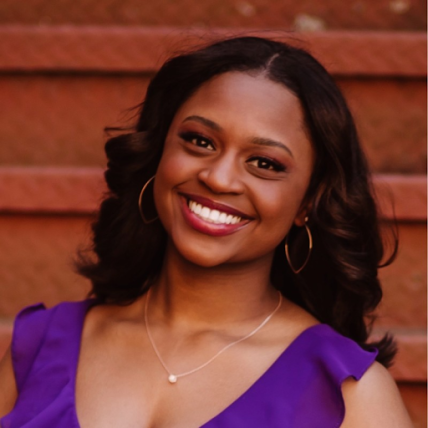
Santana Kavanaugh (MPA-PNP 2025), community service and outreach chair, NYU Wagner Black Student Association
For Santana, Community Service & Outreach Chair for the Black Student Association (BSA) and Co-Chair of Students for Ending Mass Incarceration (SEMI), the path to public policy is deeply personal. Rooted in her upbringing in Kentucky, her work is driven by a need to challenge the systemic inequities that shaped her early life. Now specializing in International Development, Santana views advocacy through a decolonial lens, seeking to dismantle structures of violence and replace them with community-led, restorative solutions. In her leadership, she champions a philosophy of "bottom-up" change, drawing on her experience with The Fair Justice Initiative in Accra, Ghana, and Freedom Agenda in New York City. With a vision set on international human rights law and prison abolition, Santana approaches the work of justice with unwavering optimism, believing that the power to reimagine the future lies within the communities most impacted by the past.
Your journey reflects a deep commitment to justice across local and global contexts. What drew you to public policy as a field of study, specifically focusing on International Development?
Although I am grateful for how my experiences have shaped me as a person, I would be lying if I said I did not grow up frustrated by the lack of support for my family when we needed basic human necessities. The frustration that culminated during those times of need is what ultimately led me to want to be an advocate. I was drawn toward policy work through my lived experiences growing up in a Black, low-income, single-parent household in Kentucky. I grew up in a state where most of my politicians and peers were strongly opposed to policies that would have improved my circumstances as a child.
My commitment to challenging systems of inequity globally stems from my personal beliefs as a decolonialist and from recognizing a pattern of overrepresentation of colonized people in contemporary struggles related to premature death, lack of wealth, access, and opportunity. I decided to specialize in international development because I believe that in order to truly liberate victims of colonialism and white supremacy, there must be a revolutionary transformation, and such a transformation must be an international collective effort.
This year, you’re serving as BSA’s Community Service & Outreach Chair. What motivated you to step into this leadership role, and what initiatives are you most excited about?
I was inspired to serve on BSA’s e-board after my undergraduate experience as a student leader. I used to lead a club called the Association of African Development, and there I helped provide a space for NYU students in the African diaspora community to hold conversations and think about issues that were imperative to advancing the African diaspora through internal healing and Pan-Africanism. I conceptualized two events, the Diaspora Discussion and the Unification Gala, both of which are now annual events at NYU. Seeing how these events grew over the years and the impact they had led me to want to continue being a student leader and to keep providing these spaces. Relatedly, I am most excited about BSA’s policy-focused events this semester. I think that while it is important to discuss and theorize, it is equally important to turn those ideas into practical action, and I like that within BSA, we can have those conversations and apply them to the work we do outside of school and the work we plan to do in the future.
Your career in public service began with volunteer positions on several state-wide political campaigns in Kentucky. How has this grassroots experience influenced your approach to enacting change?
My experience in Kentucky demonstrated to me, at a young age, the power of community organizing and the importance of centering the people most impacted by social issues as leaders in developing solutions. As a child, I often grew up with the perception that change was external and came only from people in elected positions, rather than from myself or my community. Working with grassroots nonprofit organizations after working on political campaigns allowed me to see the essential role of bottom-up approaches to social change and the importance of recognizing the power we hold within ourselves and our communities. I came to understand that long-term, sustainable progress only truly emerges when communities are empowered to articulate their own needs and design solutions that reflect their lived experiences.
While at NYU, you’ve worked with organizations like the NYC Department of Youth and Community Development and African Communities Together, centering community voice in policy and outreach efforts. What has been most rewarding about this work?
I think the most rewarding aspect of my work has been the opportunity to engage across generations and share my perspective on how I understand and approach the world. At times, entering new spaces as an intern or student with optimism can be perceived as naïve or even annoying, especially by those who have been engaged in this work for much longer. But some of my favorite conversations in these spaces have been with someone older than me, where I get to explain why I am so annoyingly optimistic and why I hold such high expectations for societal change. I truly believe that hope is a necessity in social justice work today and I think that in order to be an effective advocate in this space, one must sustain hope and optimism; otherwise, there is a risk of burnout, and of limiting not just oneself but the communities one seeks to serve by failing to imagine what is possible beyond what we have been told or conditioned to believe is possible. In expressing this, I have sometimes witnessed others become slightly less pessimistic on a certain issue or rediscover that sense of possibility through my own optimism, and I think there is something deeply powerful and beautiful about those moments.
Looking ahead, how do you hope to carry your experiences at Wagner into your future work in public service?
After Wagner, I hope to attend law school and ultimately become an international human rights lawyer. I want to advocate for people subjected to human rights abuses in prisons across the globe. But ultimately, I aspire to advocate internationally for the abolition of prisons, for the dismantling of criminal legal systems that are rooted in punishment, racialized control, and colonial violence, and for advancing systems grounded in restorative justice and community-led approaches. I truly believe that more equitable systems are possible, and my goal is to do as much as I can in this lifetime to help people recognize this and to push toward that future.