

An Immersive Journey into Sustainable Urbanism: A Spring 2025 Course in Amsterdam
In March 2025, as part of the course "Smart, Sustainable Planning in Amsterdam," NYU Wagner students embarked on a transformative academic journey to the Netherlands. This immersive, one-week trip offered a rare opportunity for students to delve deep into one of the world’s most innovative cities in terms of urban planning, climate adaptation, sustainable mobility, and smart technology. The experience provided students invaluable real-world insights, enabling them to apply learned concepts to their home base of New York City.
Amsterdam: A Model of Sustainable Urbanism
Amsterdam, long recognized as a global leader in sustainable urban development, from its world-class cycling infrastructure to its pioneering flood mitigation strategies, allowed students in the course to gain firsthand experience of these transformative solutions, learning not just from theoretical lectures but by seeing the ideas in action throughout the city.
As Assistant Clinical Professor of Public Service Sarah M. Kaufman, the course instructor, explained, “This Amsterdam course really complemented what we were doing in the Urban Planning curriculum at Wagner. It bridged theoretical concepts we had learned in class with actual implementation on the ground.”
Kaufman, who designed the course to integrate with students’ ongoing studies at Wagner, highlighted how the trip allowed them to witness how these sustainable solutions play out in a different cultural and political context, providing unique lessons they could bring back to New York City. “I’m often guilty of thinking that New York’s challenges are somehow completely unique,” she said. “But when we see how other cities have tackled similar problems, it challenges that assumption and opens up new possibilities for our professional discussions.”
The Itinerary: A Week of Exploration and Learning
The course’s itinerary included on-the-ground observations, immersive experiences, and expert-led discussions with professionals from Amsterdam’s own City Planners to innovators at the AMS Institute—many of whom were personal connections from Kaufman’s own network.
The week began on Sunday, March 23, with a welcome dinner, where students had the chance to meet their peers and instructors, setting the stage for the academic and cultural journey ahead.
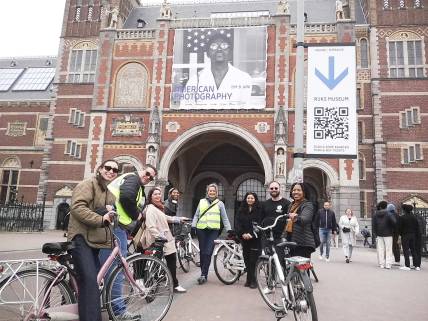
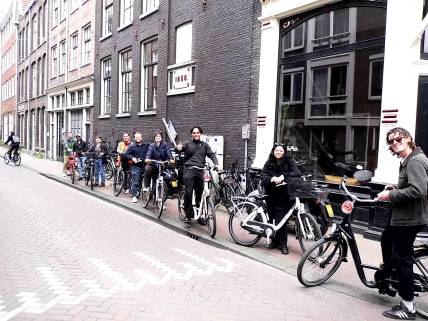
On Monday, the group began their studies with an interactive series of lectures from Amsterdam City Planners ranging in topics from innovations in mobility to zero emissions zones, followed by a guided walking tour of Amsterdam. This tour helped students gain an understanding of the city’s historic urban fabric and how it has transformed into a model of sustainable urbanism. The next day, Tuesday, the students met with sustainable mobility specialists from Amsterdam Bike City and participated in an afternoon sustainable mobility bike tour to experience the city's one-of-a-kind cycling infrastructure.
“Amsterdam shows that transformation is possible,” Kaufman noted, reflecting on how the city’s shift from a car-dominated landscape to one where bikes rule the road was a powerful example of urban planning done right. “There’s something powerful about seeing the city from a bike,” she added. “It felt like we were experiencing Amsterdam as locals do, not just as tourists. It really brought to life all those policy and design choices we'd been discussing in class.”
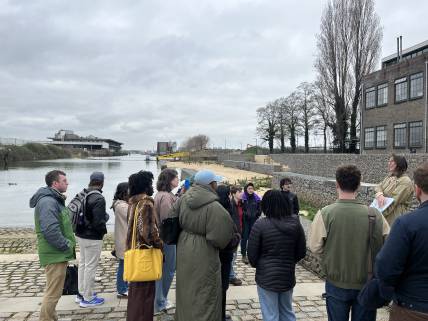
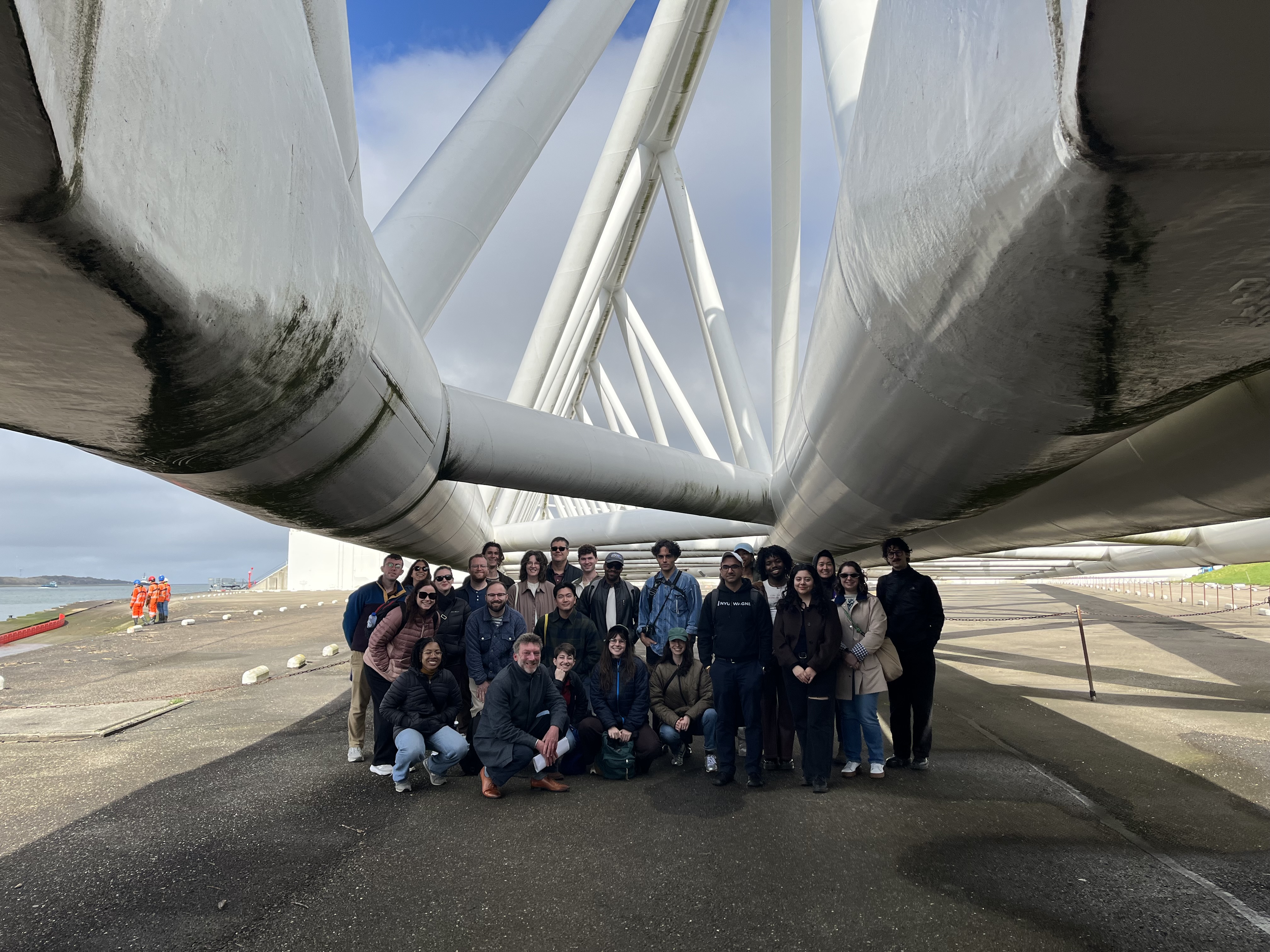
Wednesday was dedicated to climate adaptation, with a full-day visit to key water management locations, including the monumental Delta Works Project and the Maeslantkering storm surge barrier. These massive structures are part of the Dutch legacy in flood protection—a vital area of expertise that holds significant lessons for cities like New York, which faces rising sea levels and extreme weather events.
On Thursday, students met with scholars from the AMS Institute, a research hub that pioneers smart urban technologies. This part of the course explored how Amsterdam is integrating technology into public spaces in ways that prioritize residents’ needs while maintaining a strong focus on privacy concerns, such as crowd-counting cameras that eliminate personally identifiable information.
“Amsterdam integrates technology in a way that’s thoughtful and human-centered,” Kaufman pointed out, emphasizing the city’s approach to creating smart solutions that genuinely improve quality of life.
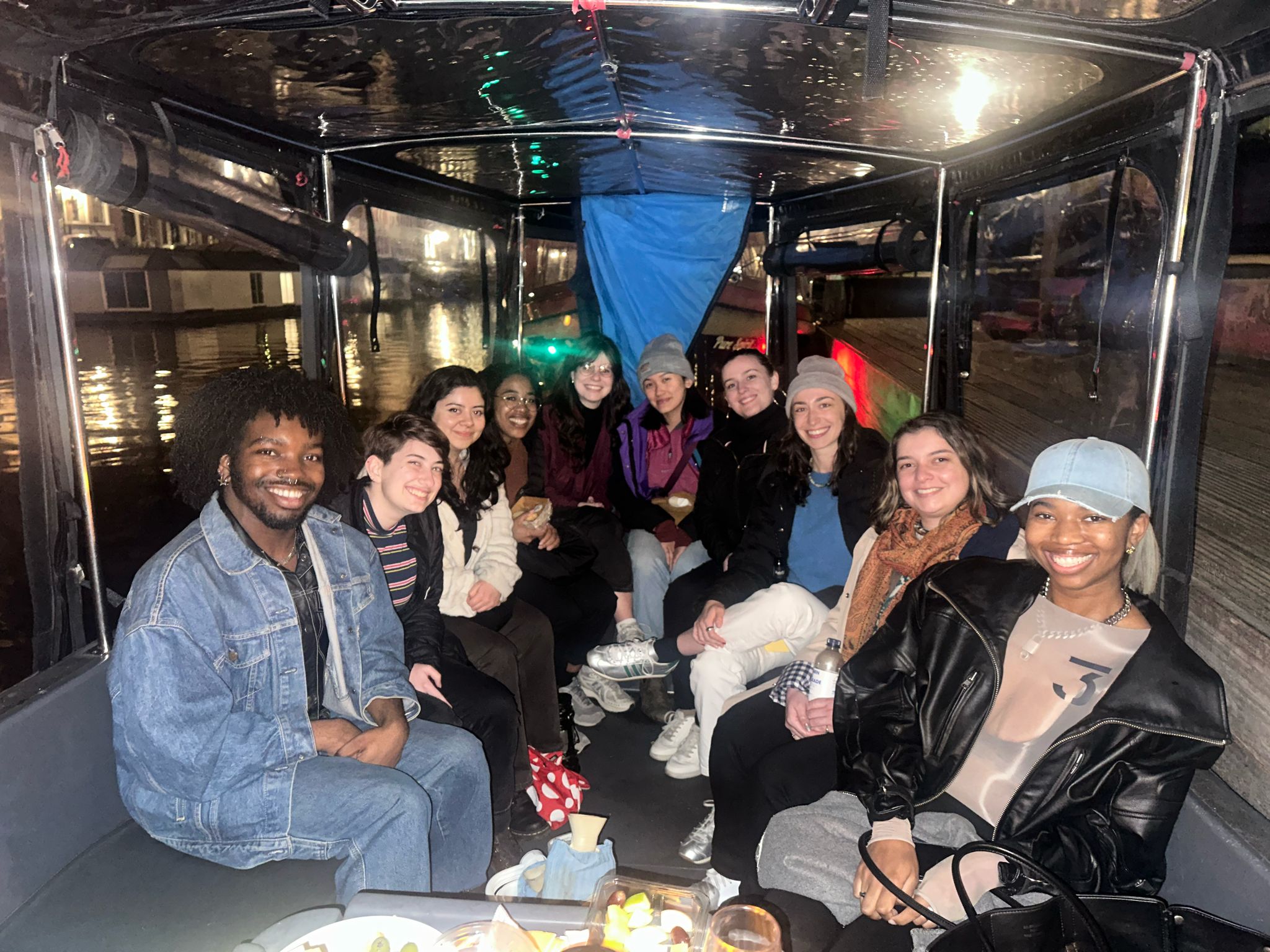
The course concluded with a second lecture series by Amsterdam City Planners on their innovation program followed by a sustainable neighborhood walking tour on Friday, and guided research on Saturday. That evening, students gathered for a farewell dinner, reflecting on their experiences and synthesizing their learning over the course of the week.
Course Objectives: From Amsterdam to New York
Upon completing the course, students were equipped with the knowledge and tools to critically analyze sustainable urban strategies and explore their potential application in cities like New York. One of the key deliverables was a comparative analysis paper and presentation that examined how Amsterdam’s solutions could be adapted to New York’s urban challenges, particularly in the areas of sustainable mobility, urban technology, and climate adaptation.
Students also created field observation reports that showcased their understanding of sustainable urban systems, allowing them to connect real-world observations with academic theory, preparing them to apply these insights in their future careers.
Kaufman highlighted that beyond practical knowledge, the course also aimed to develop a crucial skill: “Learning how to learn.” She explained, “We want students to know how to look beyond our borders for ideas, how to compare different approaches critically, and how to understand the historical and political context that shapes policies.” This, she believed, was an invaluable skill that would serve students well throughout their careers in urban planning.
And for Kaufman, one of the most rewarding aspects of the course was seeing students realize the potential for meaningful change. “Transformative urban change is actually possible,” she said. “In today’s world, with all our urgent climate and infrastructure challenges, that sense of possibility might be the most valuable thing students take from this course.