

Student Spotlight: Ariana Oliver (MPA-PNP 2027)
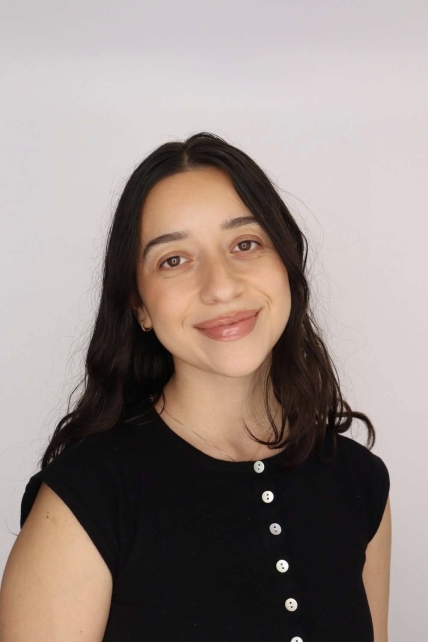
Ariana Oliver (MPA-PNP 2027), chair, First Generation Student Association
Ariana Oliver (MPA-PNP 2027) has built her career at the intersection of grassroots service and organizational strategy, drawing on her background with AmeriCorps and direct-service nonprofits to strengthen the systems behind mission-driven work. Through an internship with NYC Administration for Children’s Services, she saw firsthand how empowering local residents and fostering cross-agency collaboration can better support children and families. As a student leader, Oliver has helped revitalize Wagner’s First-Generation Student Association, creating an active, welcoming community for peers navigating graduate school and living in New York City.
What first drew you to public service, and why did you choose to pursue your MPA at NYU Wagner?
Since I was a child, I have always been drawn to helping people. As I got older, I began volunteering with service organizations focused on youth, families, and education. During my undergraduate studies, I minored in nonprofit organizational management and leadership. Through working with direct-service nonprofits and completing my service with AmeriCorps, I learned that mission-driven organizations must be infrastructurally sound with the right strategy and systems to truly maximize their impact for the people they serve. That realization drove me to pursue my MPA.
When exploring graduate programs, I was drawn to NYU’s motto, “Perstare et praestare,” which translates to “to persevere and to excel,” as well as the guiding philosophy of Wagner’s namesake, former New York City Mayor Robert F. Wagner: “Public service is the highest good, and, when done honorably and well, the most rewarding.” At its best, public service has the power to transform lives, and we should approach this work determinedly, persevering through obstacles and bottlenecks to drive better outcomes. Whether that means building a more affordable city, developing policies that support youth, or leading social change movements. Ultimately, NYU Wagner stood out for its scholarship, its ability to bridge theory and real-world application, and the opportunity to learn from faculty who bring both academic rigor and practical field experience.
What did our work with the NYC Administration for Children’s Services teach you about how city agencies can better support children and families?
This past summer, I worked with the NYC Administration for Children’s Services (ACS) under the Division of Child and Family Well-Being (CFWB) in the Office of Community Engagement and Partnerships (OCEP). OCEP collaborates with Community Partnerships across 11 neighborhoods throughout the five boroughs – coalitions of local residents who work together to make human services systems more effective, coordinated, and accessible. It is a practical approach that supports New Yorkers while empowering residents as true experts through their lived experience and deep neighborhood knowledge.
A major takeaway from my time there is that grant-funded initiatives must actively distribute power to the communities they aim to serve. Residents are the experts on their own neighborhoods and should be directly involved in community-based participatory action research to shape the changes that benefit New York City’s children and families. Equally important, strong cross-agency collaboration is essential to sustaining these local microsystems across the city.
Can you share a moment in a Wagner class or project that has shaped your perspective on public service?
During the first year, the program is structured around core courses designed to complement one another. The faculty intentionally coordinates the curriculum so our classes intersect, allowing us to examine policy challenges from multiple angles, whether weighing sunk costs in microeconomics, running statistical analyses on program data, or evaluating an organization’s financial health and capacity to carry out a policy.
Rather than pointing to a single class or project, my perspective was shaped by discovering the connection points across all of my core coursework and seeing how each discipline is essential to public service. Those courses laid the foundation for my specialization and electives, giving me the framework to dive deeper into new topics and ask sharper questions. Learning from faculty like Professors Laura Wherry, Katherine O’Regan, Martha Stark, Patricia Satterstrom, and Domingo Morel made each of those courses truly invaluable.
What inspired you to get involved with FGSA, and which initiative are you most looking forward to this academic year?
After moving from Gainesville, Florida, to New York for my master’s degree, I spent my first semester at Wagner searching for a community. Adjusting to a much larger city, I was eager to connect with peers who shared similar backgrounds and life experiences. That semester, our faculty sponsor, Professor Satterstrom, who was also one of my professors, mentioned that the First-Generation Student Association (FGSA) had previously been a space on campus for first-gen students, though it had been inactive since COVID. Bringing it back was a collaborative effort over a couple of years, with different executive boards putting in the work to develop formal logistics like a charter, values, and a mission statement. I was happy to carry on that work and ultimately be a part of getting FGSA reinstated this year.
What started as a search for my own community quickly turned into a deep investment in my fellow students’ experiences. I want incoming students to arrive at Wagner knowing there is an active space waiting for them, a room where you feel that immediate, shared sense of relief being surrounded by people who understand your journey. Since revitalizing FGSA, we’ve launched informal co-working sessions that bring students together to study and bridge connections between first-year and returning students. This spring, alongside upcoming panels and community-building events, I am especially looking forward to our May graduation celebration, where we’ll recognize both our graduating students and everyone making it through another academic year.
What advice would you give a Wagner student who’s just beginning their journey?
My advice for anyone starting their journey at Wagner is to find your people. It might sound cliché, but the peers you go through this program with and the relationships you build along the way are so valuable. Be courageous – say hello to the person sitting next to you in class, start conversations, learn each other’s stories, reach out to meet up, and go to your professors’ office hours. Learn from everyone around you and soak it all in.
The coursework can be challenging, and that is a good thing – it stretches your mind to grow. In the words of Professor Stark, “Do not be content to be confused.” Ask questions and push yourself to truly grasp the concepts, because they will prepare you for your work both inside and outside the classroom.
As my final semester approaches, I’m reminded just how fast two years go by, so make the most of every moment.