

Student Spotlight: Bee Michel (MHA 2028)
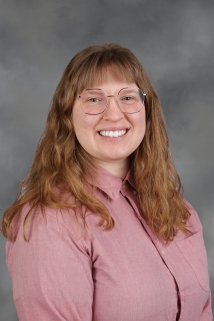
Bee Michel (MHA 2028), co-chair, Wagner Health Network
A first-generation college graduate, EMT, and recipient of the 2026 Healthcare Leaders of New York Award of Distinction Scholarship, Bee Michel (MHA 2028) brings extensive hands-on experience in emergency medicine, care coordination, and residency program administration to her study of health leadership. As Co-Chair of the Wagner Health Network (WHN), she leverages her frontline background to bridge the gap between healthcare practice and policy while fostering cross-disciplinary collaboration across NYU. Grounded in empathy, transparency, and operational efficiency, she is dedicated to transforming health systems to expand access to care and ensure equitable health outcomes for every community.
As co-chair of the Wagner Health Network (WHN), what inspired you to take on this role?
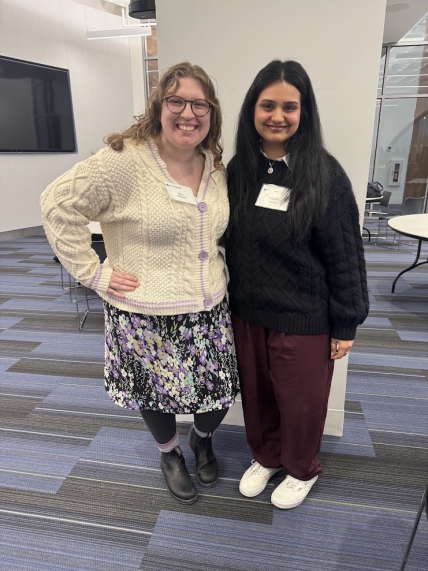
When Tanvee, who served on last year’s WHN e-board, decided to run for co-chair, she was looking for someone to lead alongside her. Tanvee, Eduardo Guzman (now our second-year rep), and I had already proven we made a great team on group projects, so we figured, why not lead one together? Ed and I both worked in healthcare for years before starting our master’s, so we bring industry experience to the table, while Tanvee brings her e-board know-how and fresh perspective. We balance each other out perfectly: she helped me ease back into being a student, and I bring real-world stories that make our class concepts click. When you find people you work well with, you want to lift them up alongside you.
Which WHN initiatives are you most looking forward to this year?
WHN exists to support Wagner students interested in health policy, management, finance, and international health, academically, professionally, and socially, and to serve as the bridge between their programs and exposure to professional connection. Healthcare isn’t just hospitals and doctors; it’s nursing homes, insurance, lobbying, retail pharmacy, durable medical equipment, and so much more. That’s exactly why I’m excited about breaking down silos this year we are hosting cross-school networking socials to show there’s a seat for everyone at the table and different disciplines can learn from one another. I’m also counting down to our Healthcare Leadership Lab, where teams get a scenario, make a leadership call under pressure, and then defend their reasoning. Our events are open to anyone at NYU curious about healthcare, so come join us!
You coordinate a family medicine residency program at Stony Brook Medicine. How has supporting physicians in training shaped your understanding of healthcare leadership and community needs?
Working in family medicine has given me a front-row seat to what works in leadership and what doesn’t. I’ve watched mandates like yearly clinical documentation retraining, or online modules get handed down with no explanation, and I’ve watched physicians receive them as punitive busywork. That disconnect makes sense; most of my residents have been in school since kindergarten and won’t finish training until their early thirties, often without ever learning about insurance, billing and coding, or reimbursement. Explaining that isn’t part of a typical coordinator’s job, but my MHA coursework and years of real-world experience have made me the person residents come to for the why. Once they hear it (accurate notes are how claims get paid, especially now that insurers use AI to review them, and that revenue decides whether a clinic can offer in-office procedures that require expensive equipment or need to refer a patient to a specialist), frustration turns into buy-in. No money, no mission.
The biggest lesson I’ve learned so far is that transparency builds trust, and trust drives compliance far better than any mandate ever could. Empathy goes a long way, too. Taking five minutes to walk a resident through a process, or acknowledging how exhausting another training module feels before explaining why it matters, makes people feel respected instead of managed. The leaders people follow aren’t the ones with the biggest titles; they’re the ones who take the time to explain and actually listen.
Family medicine also puts community needs front and center, because our residents care for patients from birth to death. Every patient needs to eat, sleep, and stay clothed, but whether they can shapes their health outcomes. It’s easy to get frustrated when a patient no-shows or skips their meds, but did they have reliable transportation? Could they afford the copay? I’m proud that our program teaches cost-aware care and prescription drug coverage, and trains residents to tailor care to each patient’s life. Seeing how inaccessible even routine screenings can be has shown me why efficient, standardized workflows matter: they’re what allow a hospital to invest back into its community.
Congratulations on receiving the 2026 Healthcare Leaders of New York Award of Distinction Scholarship. What does this recognition mean to you and the work you hope to pursue in health equity?
Honestly, it felt like someone finally saw all the behind-the-scenes work. As a first-generation college graduate who grew up in a family where healthcare was rationed by cost, I never had a roadmap, so I built my own one step at a time: running EMT calls in rural Vermont, coordinating care for oncology and cardiology patients, and now supporting the next generation of family physicians while earning my MHA and working full-time. This award is recognition of that hard work, and I’m genuinely proud of it. It’s also deeply personal. My grandmother died from complications of a stroke caused by untreated strep throat because she didn’t have insurance and couldn’t afford to see a doctor. I carry her with me in everything I do.
What I want to see in health equity is a system that stops waiting for patients to walk through the door. That means mobile clinics and home visits, reimbursement models that reward outcomes, and physicians who learn cost-aware care through real patient encounters instead of check-the-box modules. It means treating a healthy community as a smart long-term investment, not a charity case. Wherever my career takes me, my goal is to keep advocating for health equity for all, so that no one has to choose between their health and their paycheck. This scholarship isn’t a finish line; it’s a checkpoint, and a reminder to use every seat I earn to make room for people who’ve never been offered one.
What brought you to Wagner’s MHA program, and how has your experience here influenced the kind of healthcare leader you want to become?
Believe it or not, my residents talked me into it! When I moved from an outpatient clinic into graduate medical education, I brought my fast-paced clinic habits with me. I digitized three years of paper records, moved reimbursement and time-off requests online, combined schedules, and pushed for transparency. Within three months, it felt like I’d been born into the program. My residents kept joking that if all leaders were like me, everyone would have better work-life balance and better care. Then one of my graduating residents matched into NYU Langone Health’s sleep medicine fellowship and joked that I should move to the city with her because she can’t imagine working without me, and suddenly the whole class of six doctors I’d known for five months were hyping me up. We literally researched practice managers and hospital CAOs together because they thought I should ultimately be doing that, and we decided I needed an MHA to get there. NYU Wagner’s program won my heart because it complements my job instead of competing with it.
Wagner has taught me to balance head and heart. My professors have led hospitals and state health departments, worked as lobbyists, and each of them shares a passion for equitable care while remembering that there’s no mission without financing it. I’ve learned that leading doesn’t mean doing everything; it means supporting everything, being honest about what you don’t know, and building a team that has each other’s backs. Wagner has also boosted my confidence. I’ve put it into practice by co-leading a quality improvement project that raised our resident evaluation completion rates from 37% to 87.8%. I want to be the leader my residents saw in me from the start: fair, transparent, and empathetic.
As a first-generation college graduate, what advice would you give students finding their own path into healthcare leadership?
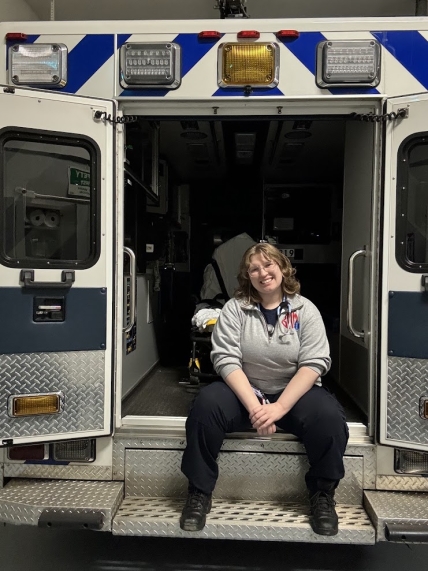
Be curious! I didn’t choose healthcare; it found me during the COVID-19 pandemic. Watching my community suffer, I asked myself, “I’m one person, what can I do?” So I became an EMT, because one person really can impact hundreds of lives. If you don’t ask, the answer is always no. Learn CPR, volunteer at a nursing home, listen to podcasts, and read. Volunteering is step one to figuring out whether you even like healthcare, and you’ll find it’s much bigger than you think, with a place for everyone.
Remember that leadership is a quality, not a title, and managing and leading aren’t the same thing. Practice leading in small ways: run a book club, organize a toy drive, or pack bags at a food pantry. And never underestimate transferable skills. My first job was at Friendly’s, and the phone skills, workflow, cleanliness standards, and customer service I learned there? I use them every single day in healthcare.