

Student Spotlight: Julian Mura-Kröger (MUP 2026)
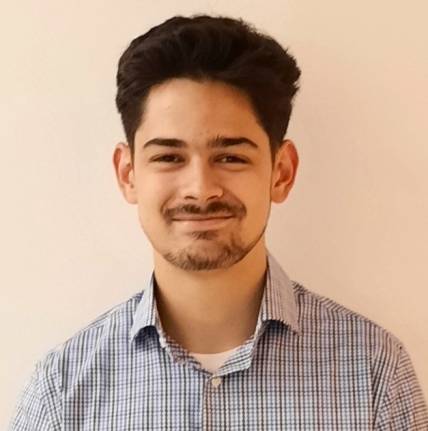
In honor of Universal Human Rights Month—and Human Rights Day on December 10, which marks the 1948 adoption of the Universal Declaration of Human Rights—we’re spotlighting the Displaced Migrants Action Group (DMAG), a student-led organization at NYU Wagner that advances equitable, human-centered approaches to migration and uplifts the rights and dignity of displaced people. Meet Julian Mura-Kröger (MUP 2026), co-chair of DMAG, whose commitment to migration justice, community engagement, and globally informed urban planning guides his leadership and vision for the year ahead.
As co-chair of DMAG, you play a key role in shaping conversations about displaced persons around the world. What inspired you to take on this leadership role, and what’s your vision for the group this year?
My vision for DMAG this year mirrors my motivations for taking on my co-chair role. I joined the group last fall, hoping to become more involved with advocacy around migration and to see how DMAG could potentially extend its reach beyond Wagner. These priorities remained coming into this year, but they also needed to reflect the realities of migration right now, with the rapidly increasing precarity that immigrants in the U.S. face and the genocides in Gaza and Sudan, which have displaced millions. My goals for the group have centered around these challenges, and we are seeking to use our platform to uplift the voices of migrants and the temporarily displaced through our events and socials, and to work with those in our community through increased volunteering efforts.
Speaking of that, DMAG offers many opportunities to volunteer and support New York City’s migrant community. What are ways that Wagner students can get involved?
The best way students can become involved is to reach out to us! We’ve been eager to increase our volunteering efforts this year and work regularly with different organizations across the city that provide a variety of services for our newest neighbors. At the moment, we have a volunteering calendar and sign-up sheet, which anyone is welcome to find through our WhatsApp channel and Instagram page, but the most reliable way to get involved is to say hi to anyone on our executive board! We’re looking to make these efforts more consistent and accessible by the start of next semester, so we highly encourage anyone interested to join us.
That’s a great plug for all Wagner students. This past summer, you interned with Map Kibera Trust in Nairobi, Kenya. How did that experience influence your perspective on urban planning and international development?
My time with Map Kibera was really valuable for many reasons, but what I think it showed me most about planning and development was just how messy they tend to be. While I was seeing how a lack of tenure and support from the government made life more difficult for Kiberans, I was also witnessing the state’s violent crackdown on dissent. The interaction of these two challenges alone—much less the persistent effects of colonialism—makes planning a very complex endeavor. At the same time, I was also able to see the many ways in which people resist these challenges, whether through Map Kibera’s work, which makes the development process more legible, or through projects like a community garden, embracing some of this messiness.
You’ve been focused on urban planning since your undergraduate studies at Chatham University, which sets you apart from many MUP candidates. How have your goals in urban planning evolved over the course of your academic journey?
I originally began my undergraduate studies in sustainability because I was very interested in how cities and other local actors can address climate change. Over time, however, I realized that my passions lay more with the broader politics and economics of housing development and community involvement than with the narrower portion of those processes which involve the environment. This passion has evolved further since joining Wagner, and I now know that my initial interest in climate and cities was tied to my foundational desire to see how the international interacts with the local and vice versa. As I prepare to conclude my time here, I hope to work where I can use my planning skills to help create more just and resilient neighborhoods for those impacted by climate and conflict.
What is the most impactful course you have taken during your time at Wagner?
There are two courses that have been the most impactful for me while at Wagner. The first was Institutions, Governance, and International Development with Professor Natasha Iskander. I felt that Professor Iskander’s consistent confrontation of theory with empirics throughout the course was invaluable in preparing me to ask the right type of questions in my studies and work since then. Additionally, I had the opportunity to take Professor Vasuki Nesiah’s seminar on human rights through the Gallatin Global Fellowship on Human Rights last spring. Getting to work with students from other NYU schools allowed me to contextualize planning and development through a more critical lens.