

Student Spotlight: Priya Vaikuntapathi (MPA-PNP 2026)
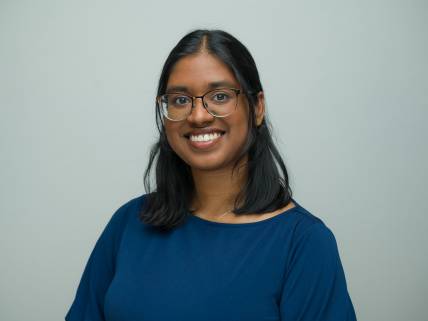
PRIYA VAIKUNTAPATHI (MPA-PNP 2026), CO-CHAIR OF PAN ASIAN STUDENT ALLIANCE
Priya is a second-year MPA student passionate about human rights and immigrant advocacy. Before coming to Wagner, she volunteered with the her school's chapter of Amnesty International as an undergraduate, and worked as a Civic Engagement Organizer at the Indo-American Center. Currently, she serves as Co-Chair of the Pan Asian Student Alliance (PASA), which aims to be a network and support system for the Asian American and Pacific Islander community at Wagner. Priya also serves as Event Chairs of the Displaced Migrants Action Group (DMAG), a space for students interested in displacement and migration policy to collaborate.
PASA helps create space for community and connection at Wagner. What made you want to be part of that work?
I wanted to be a part of PASA because as a new student at Wagner, I was looking for a space for community and connection. In college, I had the opportunity to work at the Asian American Cultural Center and lead a South Asian American Leadership Conference. Those experiences were integral to my growth as a leader and I knew that finding a space at Wagner where I could be intentional about building community was important to me. PASA is a welcoming space where we get the opportunity to learn about so many different cultures and communities across Asia and also connect with each other over shared identities and I knew that I wanted to be a part of cultivating that space.
You’re also involved in DMAG. How has your experience organizing with immigrant and South Asian communities shaped the way you think about student leadership at Wagner?
My experiences organizing with immigrant and South Asian communities taught me a lot about challenging existing power dynamics and the value of collaboration. This has shaped the way that I think about student leadership at Wagner because I see it as an opportunity to provide spaces for collaboration, connection, and shared leadership. Through PASA and DMAG, I’ve been able to work with incredible like-minded leaders to host events where students can connect, learn, and make a difference. Organizing also shaped the way that I think about leadership in how we respond and support each other during difficult times. PASA and DMAG worked together last semester to put on a Know Your Rights event similar to events I had been a part of while organizing. Providing this event at Wagner felt like an important way to ensure that people had the resources and information they might need and to bring students together to support one another.
At the Indo-American Center, you worked on language access and immigrant advocacy. What did that work teach you that still stays with you today?
A lot of the advocacy work that I did at the Indo-American Center was about extending existing services to more people, whether that was making sure that low-income benefits were also accessible to undocumented immigrants, or ensuring that ballots and voter resources were accessible to citizens in the languages that they are most comfortable with. Most policies already existed but were not being enforced or were not extended to the most vulnerable in our communities. Adding additional barriers such as having to go through complex government documents in your second or third language makes it so much harder for people who should have already been using these services to actually access them. Something that still stays with me today from that work is thinking about what it actually means to include everyone in policies and prioritizing access in the implementation and evaluation of policy work. Through those experiences I’ve wanted to be part of work that not only elevates immigrant and marginalized voices, but to also make it easier and more accessible for people of all backgrounds to be a part of decision-making processes in their own lives and in their communities.
You’ve worked in both direct community engagement and more behind-the-scenes support roles. How have those different experiences shaped your approach to public service?
Both types of experiences have shaped my understanding of the different perspectives and moving parts of public service. Direct community engagement has helped me understand the perspectives of grassroots leadership and day-to-day community challenges, while behind-the-scenes work has helped me understand funder and nonprofit administrative perspectives. My internship at the Mariam Assefa Fund supporting incredible organizations focused on migrant leadership has helped me find an approach to public service where I can still bring my experiences in community engagement to behind-the-scenes roles. These experiences have shaped my approach to public service and cultivated a passion for being a part of work that elevates the voices of everyday people in our communities and allows more people to be a part of decision-making processes.
What do you hope PASA can offer students, and what advice would you offer incoming students?
I hope that PASA continues to be a space where students can celebrate and share their cultures with each other, build community with students who have had similar experiences, and explore new perspectives, ideas, and cuisines. Through PASA, I have met people with cultural backgrounds from all over Asia and have learned so much that I would not have experienced otherwise. For incoming students, my advice would be to get involved in student organizations and take advantage of the many resources that Wagner offers. Both attending different events that student groups have hosted and being in leadership roles at Wagner has taught me so much about career pathways I am interested in and has made me feel part of a larger community.