

Student Spotlight: Sara Lam (MPA-PNP 2026)
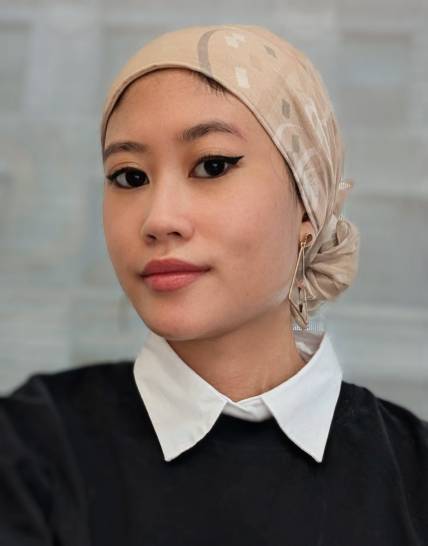
Sara Lam (MPA-PNP 2026), president, NYU Reproductive Health Action Network
Sara Lam is a reproductive justice organizer, community builder, and graduate student in NYU Wagner’s MPA-PNP program. Currently serving as President of the NYU Reproductive Health Action Network (NYU Repro), Sara leads the group’s mission to champion intersectional reproductive health access through advocacy, organizing, and education. She brings years of advocacy experience spanning high school volunteer work, partnerships with Planned Parenthood, and political organizing across multiple states. Her leadership is rooted not only in mobilizing campaigns, but in cultivating trust, mutual aid networks, and sustainable care infrastructures within and beyond the university community.
In New York City, she has worked with advocacy organizations of varying sizes and structures, bringing both grassroots and institutional insight to her reproductive justice work. As she completes her final semester at Wagner, Sara reflects on how her journey into leadership at NYU Repro has shaped both her understanding of systems change and her commitment to everyday community care.
What inspired you to step into leadership as President of NYU Repro, and what initiative or moment are you most proud of during your time in the role?
I stepped into leadership at NYU Repro after serving as treasurer for a semester. I was impressed by the volunteer network Repro created beyond Wagner and wanted to take advantage of Repro’s role in the larger NYU community. Tabling with free Plan B always reinvigorates our passion for accessible reproductive health information and resources.
The initiative I’m most proud of is laying the groundwork for a broader distribution network for reproductive health literature, condoms, stickers, Plan B, and harm reduction supplies. We hope to engage advisors, faculty, RAs, and students to circulate these supplies more widely so people have discretionary options in case they aren’t comfortable grabbing them in public.
Your path into advocacy began early, from high school volunteer work to Planned Parenthood and political organizing. How has that journey shaped the organizer and leader you are today?
My advocacy journey gave me a lot of patience and grace. I learned to prioritize mutual aid, building trust, and being a part of the community just as much as organizing or leading it. Too often, we want to create something new or continue something that isn’t working.
I’m grateful to have found my home in reproductive justice by the Combahee River Collective. As a leader, I learned to put people and the worker first before any sort of output, outcome, or organization. Sometimes we are at work simply for the check or for the resume, and I truly believe that the most meaningful work is at home. How are you showing reciprocity in your everyday connections, whether with a partner, a friend, or an acquaintance? How do you navigate difficult conversations emotionally and assertively? My leadership intentionally models values of radical love and care work to facilitate these reflections and connections.
Now in your final semester of the MPA-PNP program at Wagner, how has graduate study influenced the way you think about activism, policy, and systems change?
Graduate study affirmed my lived experience in career organizing and nonprofits. I’m grateful for the folks I’ve been able to share those experiences and frustrations with. A big question I noticed people asking was about the impact of incremental versus revolutionary change, which I found to be the basis for a nothing sandwich. I would say my most impactful classes focused on literature and theory from the Black Power Movement and other community-based researchers. These classes also emphasized the power of art and everyday social justice praxis. After reflecting on the trajectory of my life, I found that the role that calls to me right now is guiding others to find their roles, fulfill their passion, and trust their intuition of the why and how.
For Wagner students who want to get involved, what does meaningful engagement with NYU Repro look like—and what are practical ways students can advocate for reproductive justice more broadly?
Students can get involved with NYU Repro by applying to our board for the upcoming year. We also have a volunteer network to staff our tables at Bobst, and we host a few events a semester that we’d love more turnout for. Wagner students can also advocate for undergraduate students and offer to mentor those interested in public policy or nonprofits.
Outside of NYU, I encourage students to read the Combahee River Collective statement and SisterSong to learn about reproductive justice and its roots in Black, queer, feminist leaders. I would also invite folks to broaden their perspective of reproductive rights to include gender-affirming care, queer liberation, and accessibility or disability justice. A book I recommend to explore reproductive justice in everyday life, motherhood, and the adoption industry in the US is Relinquished by Gretchen Sisson. I also recommend Killing the Black Body by Dorothy Roberts and Assata: An Autobiography by Assata Shakur. BlackWomenRadicals.com also offers a wide range of resources on reproductive justice.
What's one NYU-wide reproductive health resource that you'd share with your Wagner peers?
While you may know that the Student Health Center (SHC) exists, it’s less known that they can see patients with out-of-network insurance. The SHC is a comprehensive, accessible hub for all students, with a commitment to holistic care. Personally, I visit the SHC for my ob-gyn visits, and I really love the gentle, supportive environment that the nurses and doctors create. Beyond routine check-ups, they provide a space to talk through birth control options and STI testing, and they offer referrals for abortion or gender-affirming care. Having this as a resource was essential to my experience at NYU, especially when I felt overwhelmed by the number of doctors in the city. Making an appointment was convenient through their portal and I found the cost manageable on a student budget. For any Wagner student seeking a low-barrier, supportive entry point into reproductive healthcare, the SHC is a resource I can’t recommend enough.