

Student Spotlight: Valentina Cuellar Laguna (MPA-PNP 2027)
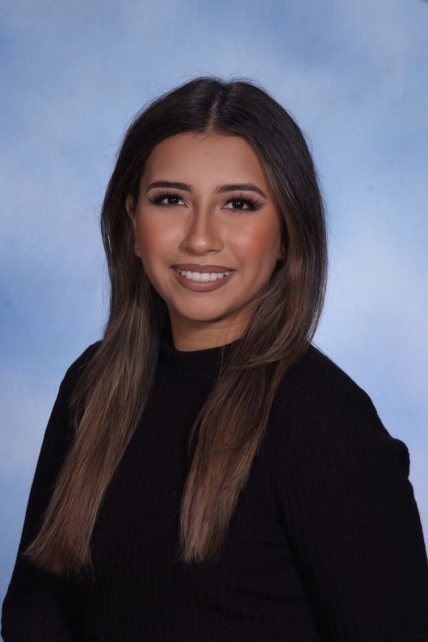
Valentina Cuellar Laguna (MPA-PNP 2027), co-chair of Displaced Migrants Action Group
Valentina Cuellar Laguna (MPA-PNP 2027), a first-generation Latinx student and co-chair of the Displaced Migrants Action Group (DMAG), leverages her frontline public policy experience to advocate for underserved communities and build trust through cross-sector advocacy. Grounded in her commitment to migration, health, and human rights, she draws on her coursework and community-based leadership to bridge systemic policy gaps and support displaced populations both locally and globally.
As co-chair of the Displaced Migrants Action Group (DMAG), what inspired you to get involved, and which initiatives are you most looking forward to this year?
As a first-generation Latinx student, getting involved with Displaced Migrants Action Group (DMAG) felt deeply personal. I wanted to belong to a space with people who were passionate about migration the way I am. Alongside my co-chair, Madline Kunde, our mission is to establish a safe haven where individuals from diverse backgrounds, experiences, and expertise can find a platform to advocate, offer assistance, and create an environment where we can not only provide academic support but also serve as peers who can support mental and emotional well-being. I am looking forward to our Know Your Rights event in partnership with the Students for Ending Mass incarceration (SEMI)! This will be in partnership with the Mayor of Immigrant Affairs and other agencies and nonprofits. It has been a personal goal of mine to work with MOIA, so I am excited to be able to help create this event along with such amazing and bright people! Please join us on November 19!
You wrote a City Limits op-ed advocating for more equitable mental health care for Latinx New Yorkers. What motivated you to speak out about this issue?
I have personally had experiences with mental health care in NYC, which is where I was born and raised, and how it has affected people near and dear to me. At NYU Wagner, my introduction to public policy class gave me the space and encouragement to dive deep into an issue I'm passionate about. I am extremely grateful for my professors' support, and I knew I wanted to advocate for my community on an issue many people in my community don't have space to talk about. I am proud to have investigated and learned that there are ways to address these issues, not only in the Latinx community, but in other underserved communities. I found that community building is a vital tool for approaching these issues and building trust. Learning this during my first semester at Wagner was monumental and shaped how I continued to face issues throughout my three years at Wagner and in my full-time job as an External Affairs Coordinator. I also believe this led to the opportunity to continue investigating mental healthcare in my current capstone project! I'm excited to keep learning through the project and to work alongside others while learning from the community itself.
How has your interest in international development shaped the way you think about displacement and the support people need when building a life in a new community?
Growing up in New York City, specifically in Queens, truly shapes the way you see different cultures and experiences. Growing up in public school, you grow up with kids from so many cultures, and being the daughter of immigrant parents also exposes you to the challenges of being an immigrant. From a young age, I knew I was passionate about helping others alongside them, especially migrant communities. I believe this is where my passion for international development really began. Throughout my personal and professional life, especially at Wagner, I have developed my own definition of international development. I believe we should learn from different cultures and communities and use our strengths to teach one another so we can evolve and develop. Being open-minded and having empathy will take us a long way. This shapes how I think about displacement and the support people need when building a new community. We must be empathetic and supportive, listen to what people truly need, and not project our biases onto them. Everyone is different, yet we are all humans at the end of the day.
What drew you to NYU Wagner, and is there a course or experience here that has changed how you approach community advocacy?
What drew me to NYU Wagner was the flexibility to be a full-time worker and a student. I also liked the coursework and the ability to blend and create my own program. I knew the specialization I wanted to pursue before I even got to NYU Wagner, but once I was in the program, taking classes from different programs and specializations gave me the tools to be well-rounded in the classroom, the workforce, and as a person. A lot of the topics I saw in my education and social policy class, or Planning and Public Policy in NYC, have allowed me to learn how to advocate for others or how systems in NYC agencies work, and I have been able to bring that into the workforce and in my own personal community advocacy. Truly understanding how vital trust is, and being able to build it through community-based work, has changed the way I approach my community advocacy.
What advice would you give first-year Wagner students whose public service interests span several areas, such as migration, health, and human rights?
My advice would be to be a generalist and take a variety of classes. Being able to self-analyze and decide whether you want to be a specialist or a generalist really helps you map out your roadmap. I thought I wanted to narrow down to one issue, migration, before coming to Wagner. But through my classes and experience, I realized I wanted to use the educational space I had and absorb as much knowledge from others' specializations as I could. Also, student organizations have helped me to keep advocating and learn from others through events and networking opportunities, even outside the classroom. Many skills are transferable and needed across sectors. Once you realize how interconnected these interests are, you can step back, see the bigger picture, and understand that, one way or another, you can advocate for many interests at the same time!