

Student Spotlight: Maya Koehn-Wu (MUP 2026)
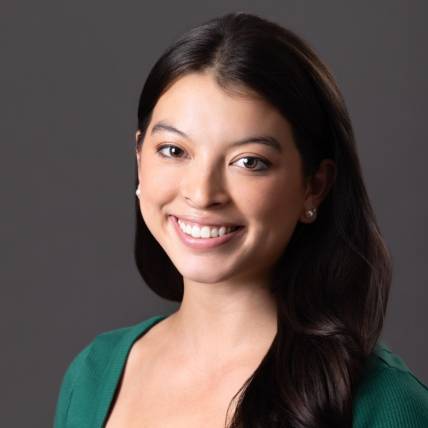
In honor of Universal Human Rights Month—and Human Rights Day on December 10, which commemorates the 1948 adoption of the Universal Declaration of Human Rights—we’re spotlighting the Displaced Migrants Action Group (DMAG), a student-led organization at NYU Wagner that advances equitable, human-centered approaches to migration and uplifts the rights and dignity of displaced people. Meet Maya Koehn-Wu (MUP 2026), co-chair of DMAG, whose deep roots in community-led migration work, global public service, and arts-based storytelling inform her approach to planning and drive her commitment to building more inclusive and resilient communities.
What inspired you to join DMAG, and which group initiative are you most excited about this year?
I was inspired to join DMAG because, during my undergraduate studies, I helped develop a community-led initiative called Cville Tulips, which focused on building community resilience among Afghan women and children. Every week, we brought women and children together to learn English, access health education, connect with community services, and build community through arts and crafts. Sundays were full of drum circles, beading, painting, theater, and eventually dancing.
Working with Cville Tulips sparked my interest in migration, cities, and community building, interests I hoped to explore further in NYC. Joining DMAG has allowed me to learn more about the migration space here, stay connected to community-centered work like Cville Tulips, and engage in broader conversations about displacement. I am most excited about planning a spring semester event on climate migration.
Urban planning plays a major role in how cities absorb and support newcomers around the globe. How do you see planners shaping more inclusive spaces for migrants and displaced people?
Migration, climate change, and urbanization are fundamentally reshaping cities. For planners, this means focusing on how to accommodate, integrate, and build resilience to these changes. I am especially interested in the barriers migrants face when they’re pushed to the urban periphery or informal areas, which are often disproportionately affected by climate impacts such as flooding, limited green space, or environmental hazards.
Planners have real power to make cities more inclusive, whether through on-the-ground community engagement and relationship building (like my work with Cville Tulips), or through larger-scale interventions such as building resilient infrastructure, financing affordable housing, expanding transit access, creating more green space, and rethinking how resources are distributed across neighborhoods.
In 2020, you co-founded Sisters Project Peru, a project focused on improving healthcare access and rural infrastructure in Peru. What drove you to start this work, and what have you learned along the way?
Sisters Project Peru began during a family trip to Machu Picchu in 2019. When visiting the community, they shared that they were working through eco-tourism to raise funds for a health clinic, due to their geographic isolation and limited access to care. When COVID hit in 2020, my sister and I realized that Huacahuasi would need a clinic more than ever. We reached out to the community and to Yanapana Peru, a nonprofit working on the ground, to ask if we could help fundraise and amplify the community’s voice. That is how Sisters Project Peru was born.
Through this work, I have learned what systemic barriers to healthcare look like and how geographic isolation often intersects with gender and race. I also learned how challenging community engagement can be in spaces where women have historically had limited voice, but also that change is absolutely possible.
Beyond Sisters Project Peru, you’ve built a broad background in public service on an international scale. What fuels your commitment to international efforts, and how do you choose which topics to engage with?
International development can often feel intangible. It’s hard to imagine how far one dollar goes in someone else’s reality. Because of that, global issues can be easy to disregard. But working in public service has shown me the importance of seeing every person as an agent of change.
Working with the community of Huacahuasi taught me that even when our realities differ, people share the same hopes, dreams, and desires. That perspective fuels my commitment. I choose to work on problems where community members express a need and where I feel I can move resources, energy, or attention in ways that expand opportunity, regardless of where someone was born.
How has your creative background influenced your approach to planning and community work?
At my core, I see myself as an artist, and that deeply shapes how I live my life and how I approach planning. I grew up in a Latin dance studio filled with immigrants, where we communicated through rhythm and movement rather than language. I also grew up painting with my grandfather and playing piano with my dad and sister.
Art has been one of the most powerful tools for connection in my community work. At Cville Tulips, beading circles helped women open up and share their stories. Drum circles brought back the joy of dancing at weddings. In Sisters Project Peru, the tapestries women weave capture the vibrancy of Andean Indigenous culture, and selling them creates meaningful economic empowerment. In the United States, a photo or a video can convey what words sometimes cannot, the feelings of empowerment, resilience, and hope that come with expanding access to healthcare.
What’s your advice for students who are passionate about addressing international problems but do not know where to begin?
Listen to others, support the work that is already happening, and dive in. Many voices go unheard, but if you listen, people will tell you where and how you can help. From there, it is about rolling up your sleeves and working alongside communities. Anything you do helps, and what you do matters.